Posted on Leave a comment

The Truth About 
Communion in the Hand – Part 2

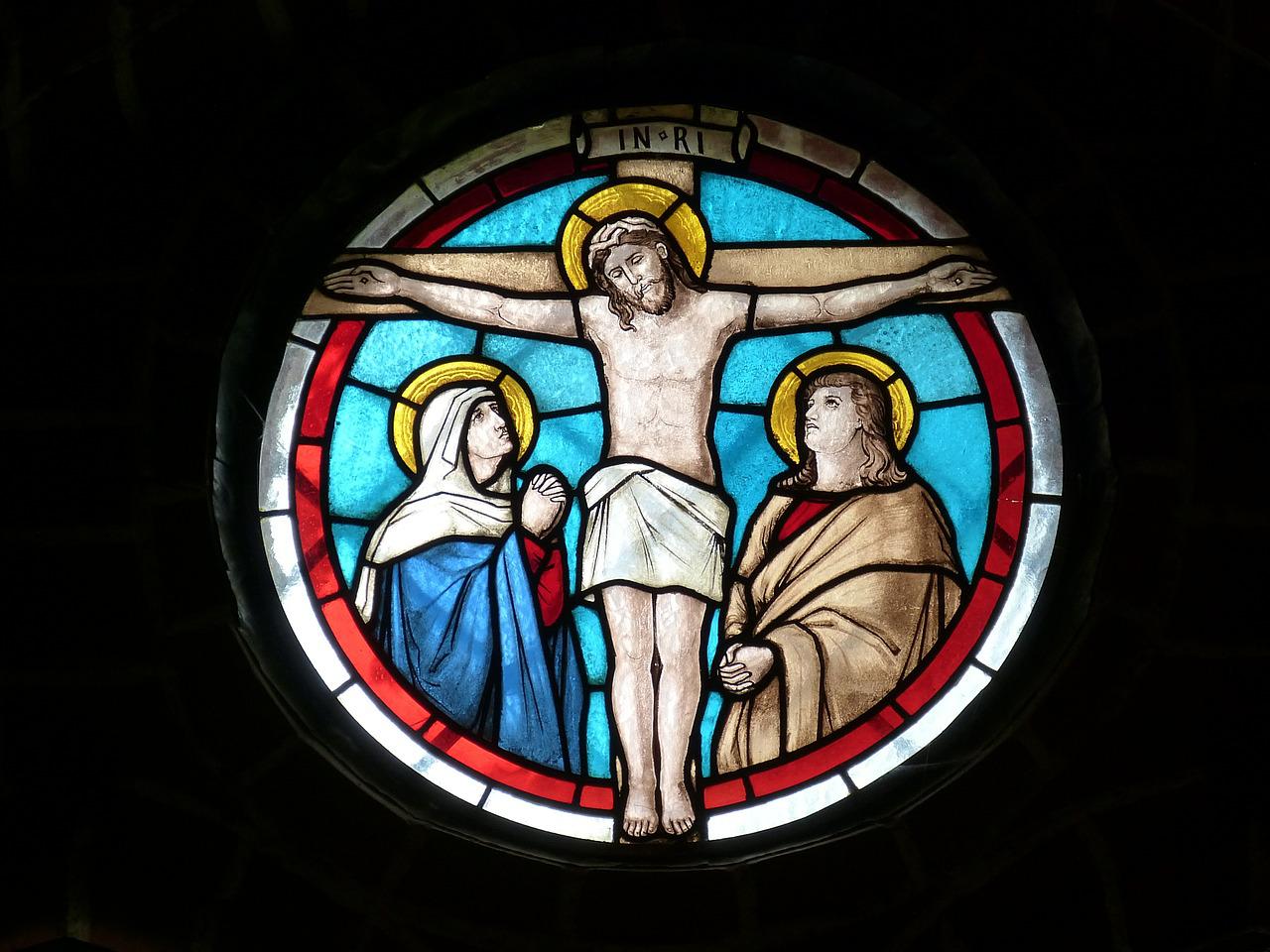
Church Window Stained Glass  - falco / Pixabay

Continued from The Truth About 
Communion in the Hand – Part  1

Not “Optional” for the Clergy!

              Now we are at the point where Communion in the hand is viewed as a superior way of receiving the Eucharist and the vast majority of our little children are being misinstructed to receive First Communion in the hand. The Faithful are told that it is an optional practice, and if they dot like it, they can receive it on the tongue. The tragedy of it all is, if it is optional for the laity, in practice it is not optional for the clergy. Priests are falsely instructed that they must administer Communion in the hand, whether they like it or not, to anyone who requests it, thereby throwing many good priests into an agonizing crisis of conscience.

              After the Second Vatican Council, a very wise Archbishop shrewdly observed that the masterstroke of satan was to sow disobedience to Catholic tradition through obedience.

              It is obvious that no priest can be lawfully forced to administer Communion in the hand, and we must pray that more priests will have the courage to safeguard the reverence due to this Sacrament, and not be trapped into a false obedience that causes them to cooperate in the degradation of Christ in the Eucharist. They must find the courage for opposing this novel practice by remembering that even Pope Paul VI, despite his weaknesses, correctly predicted that Communion in the hand would lead to irreverence and profanation of the Eucharist, and a gradual erosion of correct doctrine —and we have seen this prophecy come to pass. And, if the priest’s opposition to Communion in the hand should be fierce and firm, their opposition to “Extraordinary Ministers” should be even more adamant.

“Extraordinary Ministers”

              In his best-selling book, The Last Roman Catholic?, James W. Demers said “Of those responsible for the lack of beauty in the Church, no one is more culpable than today’s lay ministers. The mindless behavior of this superficially trained laity brings to the sanctuary a pomposity that is both embarrassing and saddening to watch.”

              Lay people giving out Holy Communion during Mass was rightly considered an unthinkable act of sacrilege and irreverence only 30 years ago, and for centuries preceding. But now, lay people administering the Blessed Sacrament is an ordinary sight in the average Novus Ordo parish church, and most Catholics think nothing of it — proving that men can become desensitized to desecration.

              It seems like they came from nowhere. All of a sudden, there they were! And where they were, they were for keeps! But if you think about it, there were some necessary steps that we sat in the pew and watched develop that laid the foundation for this plague of unconsecrated hands com- missioned by pastors to degrade the Eucharist, usurp the duty of those in Holy Orders, undermine the priesthood, and rob the altar of God of its sacred rights.

              Bishop Sheen once wrote that both men and women are slaves to fashion, but with this difference … he said if women are slaves to fashions of clothing, men are slaves to fashions of thought. And the fad and fashion that was the pride and joy of many post-Vatican II Churchmen, in the name of making the Church more “relevant” was the idea of lay-involvement in the liturgy.

              Lay people started reading the Epistle, and the new responsorial psalms. They conducted the tedious “Let us pray to the Lord — Lord hear our prayer” “Prayers of the Faithful”, and even greeted us over the microphone before Mass — wishing us “good morning”, telling us what hymns we’ll be singing and what Eucharistic Prayer Father fancies today.

              The sanctuary became a stage, and a weekly one-man-monologue would no longer do. The bigger the cast, the better, and the gripping drama of the Mass became an amateur show. The priest, a man who had been called by God and who had been specifically trained in the study and dispensing of the sacred mysteries had to step aside, either willingly or reluctantly, to allow unqualified, out-of-place, part-time dabblers to trespass and profane His sacred domain of sanctuary and altar.

              But lay-readers within the New Mass was not the only necessary step. Lay ministers of the Blessed Sacrament would not have been possible without the revolution in rubrics that preceded it: the practice and widespread acceptance of lay-people receiving the Holy Eucharist in their palms. The office of Eucharistic minister is therefore the illegitimate offspring from the union of the New Liturgy’s “lay involvement” and Communion in the hand living together in the modern Church. It is a love-child of the 1960s revolution.

Everybody’s in on the Act!

              You can be sure there were many Catholics willing to become part of this “lay-elite” who distribute Holy Communion, but there were also Catholics whose good Catholic sense was initially opposed to this practice, but who eventually allowed themselves to be talked into it by persuasive clergymen, and the biggest ploy used by modern clergy was to resort to flattery … to approach good Catholic men and women saying “You’re a good parish member, an exemplary Christian, a good father or mother, so we want to bestow upon you the ‘honor’ of being a Eucharistic minister.”

              So what have they done? They’ve taken the distribution of Christ’s body, something so sacred that it belongs to the priest alone and turned it into a childish reward for good behavior: like a merit badge that would be given to a cub-scout for swimming a mile or building a wigwam, or like a star that would be placed on the forehead of a third-grade girl because she’s the only one in class who could correctly spell “Czechoslovakia”.

              It’s been disguised as a reward that the good and humble in the parish accept reluctantly, and then get used to. Or it’s a position that the proud and pompous in the parish lust after, thereby showing themselves incapable of recognizing a false and petty prestige.

“Extraordinary Minister” or “Eucharistic Minister”?

              The terms “lay minister” and “Eucharistic minister” have been used rather loosely up until this point, because this is the terminology often found in parish bulletins. In actuality, there is no such terminology as “Eucharistic minister”, the proper term is “Extraordinary minister”.

              When it comes to the sacraments, “extraordinary minister” is classic terminology. For example, the “ordinary minister” of Confirmation in the Roman Rite is the bishop, and the “extraordinary minister” is the priest, specifically delegated by the bishop in extraordinary circumstances. So, if words mean anything, as Michael Davies pointed out, an extraordinary minister should be an extraordinary sight. Not only should we rarely see one, but there should be many Catholics who go through their entire life without once seeing an extraordinary minister. But today, there’s nothing extraordinary about extraordinary ministers. They are as ordinary and part’n’parcel of the modern Church as missalettes and collection baskets. This is clearly a calculated abuse of classic Catholic terminology used to introduce a novelty into the New Mass that has no foundation in Church History or Catholic practice.

              On January 29, 1973, an Instruction was issued by the Sacred Congregation for Divine Worship that authorized the introduction of Extraordinary Ministers of the Eucharist called Immense Caritatis. This document does not grant some revolutionary indult for any and every parish to permit lay-people to administer Communion, it authorizes the use of extraordinary ministers in “Cases of genuine necessity” which are listed as:

              • When there is no priest, deacon or acolyte.

              • When these are prevented from administering Holy Communion because of another pastoral ministry or because of ill health or advanced age.

              • When the number of the Faithful requesting Holy Communion is such that the celebration of the Mass or the distribution of the Eucharist outside Mass would be unduly prolonged.

              The Instruction stipulates that:

              “Since these faculties are granted only for the spiritual good of the Faithful and for cases of genuine necessity, priests are to remember that they are not thereby excused from the task of distributing the Eucharist to the Faithful who legitimately request it, and especially from taking and giving it to the sick.”

              First of all, it is not an act of disloyalty or disobedience to question the wisdom of the document in the first place, particularly when this permission is a revolution against all the pre-Vatican II rubrics that existed for centuries — rubrics that existed for reasons of reverence, to safeguard against desecration and that were a matter of Catholic common sense. But even taking this document at face value, it is difficult to envisage circumstances that would justify the use of Extraordinary Ministers outside of mission lands. Today’s “Eucharistic Ministers” actually operate in defiance of existing Vatican norms.

The Age of Ambiguity

              The term “taken at face value” was used because, as some astute readers will have already noticed, the document just quoted from was loosely worded. The document had that ambiguity, imprecision and elasticity that has characterized many of the Vatican II and post-Vatican II documents.

              Though there is no hard proof that the loose wording of Immensae Caritatis was done on purpose, there is ample proof that the ambiguity in the Vatican II documents was deliberate. Influential liberal theologians at Vatican II, admitted that placing deliberate ambiguity in the Council documents was a key strategy of the progressives. One said, “We have used ambiguous phrases during the Council and we (the liberal theologians) know how we shall interpret them after.”

              The main ambiguity which probably gave rise to today’s proliferation of Extraordinary Ministers was the justification of their use if Mass would be (what was called) “unduly prolonged”. Now, does this mean 5 minutes or 45 minutes “unduly prolonged”? It depends on who interprets it. And in instructions of this nature, lack of precision gives rise to wide interpretation, and wide interpretation gives rise to the establishment of an abuse under the appearance of fidelity to Church regulations. And once a fad like “Extraordinary Ministers” becomes widespread, and everybody’s doing it simply because everybody’s doing it, then who even pays attention to existing guidelines anyway? It is a pattern we see over and over again in the modern Church: “Let’s violate the law, and in the end we’ll have the violation established as local custom.”

Unsuccessful Papal Intervention

              This unlawful abuse is so well established as local custom that even Pope John Paul II, who made at least a paper attempt to curb the abuse was completely unsuccessful. In his letter Domincae Cenae of February 24, 1980, the Pope restated the Church’s teaching that “to touch the sacred species and to administer them with their own hands is a privilege of the ordained.” But, for whatever reason, this 1980 document contained no threat of penalty to any laymen, priest or bishop who ignored the Pope’s plea. A law without a penalty is not a law, is a suggestion. And this 15-year-old letter of Pope John Paul II has been taken as an unwelcome and unheeded suggestion by the hierarchy and clergy of Western countries.

              On September 21, 1987, a letter was sent from the Cardinal Prefect of the Congregation of the Sacraments through the proper channels to a number of Episcopal Conferences, including our American Bishops, on the subject of Extraordinary Ministers. In summary, the letters (which can be found in Michael Davies’  Privilege of the Ordained) stated that Rome has received many complaints of abuses regarding Extraordinary Ministers. As a result, the Pontifical Commission officially ruled that “when ordinary ministers (bishops, priests) are present at the Eucharist whether celebrating or not, and are in sufficient number and are not prevented from doing so by other ministries, the Extraordinary Ministers of the Eucharist are not allowed to distribute Communion either to themselves or to the Faithful.”

              This ruling too, has been completely ignored, as will be all rulings providing a concession for this abuse is somewhere on the books. We can only pray that our Church leaders will finally come to the realization that when it comes to the Blessed Sacrament, you dot reform an abuse, you annihilate it. And in order not to continually play into the manipulating hands of the New Paganism of Modernism, then a complete, formal, unambiguous condemnation of Communion in the hand and Extraordinary Ministers is our leaders’ only true Catholic option.

The Sense of the Sacred

              The Sacraments are the most precious gems the Church possesses, and the Holy Eucharist is the greatest of all the Sacraments. Because in all the other sacraments we receive sacramental grace, but in the Holy Eucharist, we receive Christ Himself. So, since it is obvious that the Blessed Sacrament is the greatest treasure the Church possesses, then It must be treated with all the reverence and homage It deserves. And all those pre-Vatican II barriers that prevented desecration are indispensable to the life of the Church and the holiness of the Faithful.

              How often have we heard even our Church leaders lament that “we have lost the sense of the sacred.” This is one of the most astounding statements a Churchman can utter … as if it were some sort of mystery. Because the sense of the sacred is not lost, we know exactly where it is, and it could be recovered in every single parish church on earth tomorrow. The “sense of the sacred” is found wherever safeguarding the reverence for the Blessed Sacrament is put into practice of paramount importance. But the “sense of the sacred” has not been lost, it has been deliberately thrown away, run out of town on a rail, by the arrogant agents of the New Paganism of Modernism masquerading as Catholic reformers, who have introduced novel practices into the Church that demean the Eucharist, show contempt for tradition and for what our fathers taught us, and have led to a worldwide crisis of Faith of unprecedented proportions.

              But for us, through the grace of God, it is no puzzle. We know exactly where “the sense of the sacred” is found, and we cling to it with a fierce tenacity. It is found in the celebration of the Old Latin Tridentine Mass where profound reverence for the Blessed Sacrament is deeply ingrained into every moment of the Liturgy, and where Communion in the hand and “Eucharistic Ministers” are still looked upon in horror with Catholic eyes, and are clearly recognized as the out-of-place, sacrilegious, non-Catholic practices that they are.


Bibliography

Communion in the Hand and Similar Frauds – Michael Davies
Documents of Vatican II – Abbot Edition
Dominicae Cenae – Pope John Paul II – 2/24/80
The Great Heresies – Hilaire Belloc
Immensae Caritatis – Sacred Congregation for Divine Worship – 1/29/73
The Last Roman Catholic? – James W. Demers
Memoriale Domini – Pope Paul VI – 5/29/69
Pope Johs Council – Michael Davies
Preaching and Teaching about the Eucharist – Msgr. Joseph M. Champlin
Privilege of the Ordained – Michael Davies
The Rhine Flows into the Tiber – Ralph Wiltgen
Summa Theologica – Saint Thomas Aquinas


Reprinted from the September 1995 edition of

Catholic Family News
Posted on Leave a comment

The Truth About
 Communion in the Hand – Part 1

Church Window Stained Glass  - falco / Pixabay

“Out of Reverence for this Sacrament,
nothing Touches It but what is Consecrated” – Saint Thomas Aquinas

 In his 1931 essay on The New Paganism, the great Catholic historian Hilaire Belloc warned of the post-Christian Paganism that was to come. Though the entire essay will not be treated here, for the purpose of the subject at hand, it is necessary to point out the central aspect of it: the old paganism had deep respect for tradition, and the new post-Christian paganism has a revolutionary contempt for tradition. Belloc said:

The old paganism was profoundly traditional; indeed it had no roots except in tradition. Deep reverence for its own past and for the wisdom of its ancestry and the pride therein were the very soul of the Old Paganism; that is why it formed so solid a foundation on which to build the Catholic Church, and that is also why it offered so long a determined resistance to the growth of the Catholic Church. But the New Paganism has for its very essence contempt for tradition and contempt for ancestry. It respects perhaps nothing, but least of all does it respect the spirit of ‘Our fathers have told us.’ ”

“Our Fathers Have Told Us!”

              Throughout the centuries, our fathers have told us about our Faith and about the Blessed Sacrament. Our fathers have told us that the Holy Eucharist is truly the Body, Blood, Soul and Divinity of Jesus Christ. The Fathers of the Council of Trent defined the Blessed Sacrament with precision and care. Father Thomas Aquinas taught us that out of reverence toward this Sacrament, the touching and administrating of this Sacrament belong only to the priest. Our Catholic fathers at home, as well as our teaching sisters in school, told us that it was sacrilegious for anyone but the priest to touch the sacred host.

              Throughout the centuries, the Popes, bishops and priests taught us this same thing, not so much by words, but by example — and especially by the celebration of the Old Latin Mass, where profound reverence for the Blessed Sacrament as the true Body of Christ was in every move the priest made. Our fathers told us these things not just for the sake of handing down a venerable but groundless tradition, they have told us these things through word and example to show fidelity to the Catholic Faith and reverence toward the Blessed Sacrament. Our fathers told us this because it was the truth.

              But the introduction of Communion in the hand and lay ministers of the Eucharist shows an arrogant disregard for what our fathers taught us. And though these practices have been introduced under the guise of being an “authentic” liturgical development mandated by Vatican II, the truth is Communion in the hand is not an authentic liturgical development, was notmandated by the Second Vatican Council, and shows complete defiance and contempt for centuries of Catholic teaching and practice before us, thus resembling the philosophy of the New Paganism and the philosophy of revolution.

              Communion in the hand was introduced under a false ecumenism, allowed to grow due to weakness in authority, approved through compromise and a false sense of toleration, and has led to profound irreverence and indifference toward the Blessed Sacrament as the liturgical order of our day and the disgrace of our age.

Nowhere Mentioned in Vatican II

              Communion in the hand is not mentioned in a single document of the Second Vatican Council, nor was it mentioned during any of the debates during the Council. In all sixteen documents of Vatican II, there is no mention of Communion in the hand.

              Before the Second Vatican Council, there is no historic record of bishops, priests or laity petitioning anyone for the introduction of Communion in the hand. Quite to the contrary, anyone who was raised in the pre-Vatican II Church will distinctly remember being taught that it was sacrilegious for anyone but the priest to touch the sacred host.

              The teaching of Saint Thomas Aquinas, in his great Summa Theologica bears this out. He explains:

              “The dispensing of Christ’s Body belongs to the priest for three reasons.

              “First, because he consecrates in the person of Christ. But as Christ consecrated His Body at the (Last) Supper, so also He gave It to others to be partaken of by them. Accordingly, as the consecration of Christ’s Body belongs to the priest, so likewise does the dispensing belong to him.

              “Second, because the priest is the appointed intermediary between God and the people, hence as it belongs to him to offer the people’s gifts to God, so it belongs to him to deliver the consecrated gifts to the people.

              “Third, because out of reverence for this Sacrament, nothing touches It but what is consecrated; hence the corporal and the chalice are consecrated, and likewise the priest’s hands for touching this Sacrament. Hence, it is not lawful for anyone else to touch It, except from necessity, for instance, if It were to fall upon the ground or else in some other case of urgency.” (ST, III, Q.82, Art. 13)

              Saint Thomas, who is the prince of theologians in the Catholic Church, who towers above all the rest, whose Summa Theologica was placed on the altar next to the Scriptures during the Council of Trent, and whose teaching Saint Pius X said was the remedy for Modernism … Saint Thomas clearly teaches that it belongs to the priest and only to the priest to touch and administer the Sacred Host, that “only that which is consecrated” (the hands of the priest) “should touch the Consecrated” (the Sacred Host).

              Controversy surrounds the claim that Communion in the hand was practiced in the early Church. There are some that claim that it was practiced up until the sixth century and even cite a passage of St. Cyril to substantiate this assertion. Others maintain that it was never a Catholic custom, but if Communion in the hand was practiced in the early Church, if was instituted by the Arians as a sign of their disbelief in the Divinity of Jesus Christ. This same school of thought also maintains that the quotation of Saint Cyril is of unsound Arian apocryphal origins. Whatever the case, it is clear that Communion on the tongue is of Apostolic origins (that is, taught by Christ Himself), Communion in the hand was condemned as an abuse at the Synod of Rouen in 650, and the practice of Communion in the Hand is never reflected in the artwork of any period whether it be in the East or West… that is, up until after the Second Vatican Council.

Reverence Toward Eucharist Incorporated into the Old Mass

              The teaching that only the priests may touch the Sacred Host, that the priest’s hands are consecrated for this purpose, and that no precaution was too great to safeguard reverence and prevent desecration had been incorporated in the Liturgy of the Church; that is the Old Latin Mass.

              Priests were trained in the Old Latin Mass to celebrate Mass with precise rubrics that safeguarded the reverence the Blessed Sacrament deserves. These meticulous rubrics were carved in stone and were not optional. Each and every priest in the Roman Rite had to follow them with unyielding precision.

              In the Pre-Vatican II Church, when the Latin Tridentine Mass was the norm, men training to be priests were not only taught, but DRILLED in these rubrics.

              Some of the rubrics in the Old Latin Mass are as follows:

              * From the moment that the words of consecration over the Sacred Host are uttered by the priest, he keeps his forefinger and thumb together, and whether he elevates the chalice, turns the pages of the missal or opens the tabernacle, his thumb and forefinger touch nothing but the Sacred Host. It is also worth noting that there was no leaving the Sacred Host up on the altar to walk up and down the aisles (especially before his fingers have been purified) shaking peoples’ hands in an awkward display of forced friendliness.

              * At the end of Mass, the priest scrapes the corporal with the paten, and cleans it into the chalice so that if the slightest particle was left, it would be collected and reverently consumed.

              * The priest’s hands are washed over the chalice after Communion time with water and wine which is reverently consumed, to insure that the slightest particle is not susceptible to desecration.

              These are only some of the rubrics incorporated into the Old Mass. They were not just silly scruples, but showed the Church believed with certainty that at Mass, the bread and wine truly become the Body, Blood, Soul and Divinity of Jesus Christ, and that no pains were too great to make sure that our Lord in the Blessed Sacrament was treated with all the reverence and homage that His Majesty deserves.

              Now, when it comes to showing reverence, is it possible for these rubrics to be improved upon? A true Catholic renewal would either leave these gestures of reverence intact, or enhance them. But obliterating these without apology and without convincing argument, as has been the case over the last 25 years with the introduction of the New Mass, is not the mark of genuine Catholic renewal, but resembles the New Paganism warned of by Belloc, in its arrogant contempt for tradition.

              And to add insult to injury, the introduction of Communion in the hand makes all these crucial pre-Vatican II rubrics look like superstitious sentimentalism with no foundation in reality — again, contempt for what our fathers taught us and obvious contempt for the Blessed Sacrament itself.

How Did Today’s Communion in the Hand Come About?

              400 years ago, Communion in the hand was introduced into “Christian” worship by men whose motives were rooted in defiance of Catholicism. The 16th Century Protestant revolutionaries (more politely but undeservedly called Protestant “reformers”) re-established Communion in the hand as a means of showing two things:

              1) That they believed there was no such thing as “transubstantiation” and that the bread used at Communion time was just ordinary bread. In other words, the real Presence of Christ in the Eucharist is just a “Papist superstition”, and that the bread is just bread and anybody can handle it.

              2) Their belief that the minister of Communion is no different in essence from laymen. Now, it is Catholic teaching that the Sacrament of Holy Orders gives a man a spiritual, sacramental power, it imprints an indelible mark on his soul and makes him different in essence from laymen.

              The Protestant Minister, however, is just an ordinary man who leads the hymns, reads the lessons and gives sermons to stir up the convictions of the believers. He cat change bread and wine into the Body and Blood of Our Lord, he can’t bless, he can’t forgive sins. He can’t doanything a normal layman can’t do. He is not a vehicle for sacramental grace.

              The Protestant’s establishment of Communion in the Hand was their way of showing their rejection of belief in the Real Presence of Christ in the Eucharist, rejection of the Sacramental Priesthood — in short, to show their rejection of Catholicism altogether.

              From that point on, Communion in the hand received a distinctly anti- Catholic significance. It was a recognizably anti-Catholic practice rooted in disbelief in the real presence of Christ and the priesthood.

              So, if imitation is the sincerest form of flattery, it is not unfair to ask why are our modern churchmen imitating self-proclaimed infidels who reject core sacramental teaching of Catholicism? This is a question that those Churchmen intoxicated by the liberal spirit of Vatican II have yet to answer satisfactorily.

Thanks to Ecumenism …

              Though Communion in the hand was not mandated by the Second Vatican Council, what was “canonized” by Vatican II was “Ecumenism” — this false spirit of counterfeit unity that had been previously condemned by the Church, particularly by Pope Pius XI in his 1926 encyclical Mortalium Animos — this movement of Catholics becoming more buddy-buddy and huggy-huggy with other religions, and especially with Protestants. This movement that supposedly plays up those things we have in common with other creeds, and hush-hushes those things that divide us. To celebrate our shared “values”. (“Values” is a subjective term you won’t find in pre-Vatican II theology manuals). No longer do we try to convert non-Catholics, instead we engage in useless and endless “dialogue” in which Catholicism always comes out the loser, because such dialogue gives the unmistakable impression that Catholicism no longer believes it is the sole possessor of theological truth.

              Though Ecumenism will not be treated within this article (see “The Problem with Modern Ecumenism”, Catholic Family News —  March 1995 Issue), suffice it to say that this novel ecumenical spirit which Deitrich von Hildebrand called “ECUMANIA” became rampant during and after Vatican II. The ecumenical spirit became the primary formative principle in the whole range of the new liturgical forms established since the Council. This is why the new liturgy so closely resembles a Protestant service.

The Ecumenical Monkey-See, Monkey-Do

              After Vatican II, some ecumenically-minded priests in Holland started giving Communion in the hand, in a monkey-see, monkey-do imitation of Protestant practice. But the bishops, rather than do their duty and condemn the abuse, tolerated it.

              Because Church leaders allowed the abuse to go unchecked, the practice then spread to Germany, Belgium and France. But if the bishops seemed indifferent to this scandal, the laity were outraged. It was the indignation of large numbers of the Faithful which promoted Pope Paul VI to take some action. He polled the bishops of the world on this issue, and they voted overwhelmingly to retain the traditional practice of receiving Holy Communion only on the tongue. And it must be noted that at this time, the abuse was limited to a few European countries. It had not yet started in the United States.

“Memoriale Domine”

              The Pope then promulgated the May 28, 1969 Instruction Memoriale Domine. In summary, the document states:

              1) The bishops of the world were overwhelmingly against Communion in the hand.

              2) “This manner of distributing Holy Communion (that is, the priest placing the Host on the tongue of the communicants) must be observed.”

              3) Communion on the tongue in no way detracts from the dignity of the communicant.

              4) There was a warning that “any innovation could lead to irreverence and profanation of the Eucharist, as well as gradual erosion of correct doctrine.

              The document further says “the Supreme Pontiff judged that the long received manner of ministering Holy Communion to the Faithful should not be changed. The Apostolic See therefore strongly urges bishops, priests and people to observe zealously this law.”

A Simultaneous Red Light and Green Light

              It must be asked, then, if this instruction is on the books, why is Communion in the hand so prevalent? An illustration can be given by the story of the Canadian bishops’ response to Humanae Vitae. Humanae Vitae rightly reaffirmed the Church’s teaching against contraception. But when Humanae Vitae was issued, there was a tidal wave of scandalous opposition from Catholic priests and Ph.D.s. The Canadian bishops wrote a pastoral letter supposedly in supportof Humanae Vitae, but within that document the bishops used the curious phrase “norms for licit dissent”.

              This phrase gives the impression that there could be room for Catholics to legitimately reject Humanae Vitae. So, whether they realized it or not, the bishops sabotaged their own pastoral letter, by giving a simultaneous red light and green light to rejection of the Papal Encyclical. When vast numbers of Catholics, then, rejected Humanae Vitae based on the Canadian bishop compromise, it was hardly surprising. Even the most ordinary parents are smart enough not to give their children the option to accept or reject parental commands. To do so would be a clear sign of weak and vacillating leadership. But unfortunately, this is precisely what happened with the supposedly anti-Communion in the hand document of 1969.

              Now, this was the age of compromise, and the document contained the seed of its own destruction, because the Instruction went on to say that where the abuse had already become firmly established, it could be legalized by a two-thirds majority in a secret ballot of the national bishops conference (providing the Holy See confirmed their decision.) This played right into the liberal hands. And it must be noticed, the Instruction said “where the abuse had already become firmly established”. So, countries in which the practice had not developed were obviously excluded from the concession — and all English-speaking countries, including the United States, fell into this category.

              Naturally, liberal clergy in other countries (including ours) concluded that if this rebellion could be legalized in Holland, it could be legalized anywhere. They figured that if they ignored Memoriale Domine and defied the liturgical law of the Church, this rebellion would not only be tolerated, but eventually legalized. This is exactly what happened, and this is why we have Communion in the hand today.

Started in Defiance, Perpetuated by Deception

              Not only was Communion in the hand started in disobedience, it was perpetuated by deceit. Space doesn’t allow all the details, but the propaganda in the 1970s that was used to sellCommunion in the hand to a trusting, vulnerable people was a campaign of calculated half-truths that didn’t tell the whole story. A quick example will be found in the writings of Monsignor Champlin. His writings:

              • give the reader the false impression that Vatican II provided a mandate for the abuse when, in fact, it is not hinted at in any Council documents.

              • do not tell the reader that the practice was started by clergymen in defiance of established liturgical law but makes it sound as if it were a request from the laity.

              • do not make clear to the reader that the worls bishops, when polled, voted overwhelmingly against Communion in the hand.

              • do not mention that permission was only to be a toleration of the abuse where it had already been established by 1969. It was not a green light for it to spread to other countries, like the United States.

Part 2 of 2 next week

Posted on Leave a comment

The Persecution of Mother Mariana -Part 3


By John Vennari


            Dark days were approaching for Mother Mariana and the convent in Quito.

            Mother Maria Taboada, a holy foundress of the order and beloved aunt of Mother Mariana, was coming to the end of her days. She would die in 1593 on October 4, the Feast of Saint Francis of Assisi. Prior to this, Mother Mariana was the recipient of dire prophecies concerning the Order.

            As Mother Taboada’s health was in decline, Mother Mariana was elected prioress. She was twenty-nine years old.

            On the night of her election, Mother Mariana went into ecstasy for five hours, during which she foresaw the death of her aunt, the removal of the Franciscans Friars from the government of the convent, and her own persecution and imprisonment by the non-observant sisters.

            After Mother Taboada’s death, Mother Mariana was seized with grief and trepidation. Grief, because she truly loved her aunt on both the natural and supernatural level; trepidation, for she knew a group of wayward nuns would rebel and  wreak havoc at the convent.

            The rebellion was not long in coming.

            A cadre of wayward sisters chaffed at the strictness of the Franciscan Friars who were governing the convent, and who, along with Mother Mariana, insisted on exact observance of all aspects of the Rule.

            The wayward nuns began a campaign to remove the Franciscans from the convent’s governance, and to place the convent solely under the direction of the bishop. With the Franciscans no longer ‘on site’ to monitor daily life inside the convent, there was opportunity for greater laxity.

            The Franciscans, in response, partially withdrew from governance, which served to embolden the rebellious sisters.

            Mother Mariana, plunged in sorrow, prayed to her deceased aunt Mother Taboada, “I cannot bear any more, my mother, rise up and help me.”

            Mother Mariana had good reason to invoke her aunt. When Mother Taboada died, Mariana received a supernatural communication that her aunt would spend eight days in Purgatory, and here she would suffer only the pain of loss, not the pain of fire. Mother Mariana had prayed that this brief stay in Purgatory be shorter still, and her prayers were heard. During Mass, five days after her death, Mother Mariana saw her aunt’s soul soar to Heaven. Mother Mariana thus had moral assurance of her aunt as an advocate in Paradise.

            When Mother Mariana offered her prayer of consternation to her aunt, Mother Taboada miraculously answered. She related, among other things, “My daughter, for now the separation from the Franciscans is necessary … but the golden time will come when the Franciscans will again govern my convent … there will be a member of my community who will change the spirit of the religious … She will be blind, without light to see the things of God … she will make the community suffer much, complaining to the bishop. She will boast about this, but God’s hour will come… Speak with the foundresses, since they all receive Heavenly visits …”

            Mother Mariana then knelt before the Blessed Sacrament, praying to die rather than endure the upcoming turmoil. A brilliant light then came from the tabernacle and a voice said to her, “For now it is better that the Franciscans separate themselves from the convent, but this will not happened during your time as prioress.”

            The separation would take place in the near future under a weak prioress named Mother Valenzuela, and we will tell this story shortly.


First Mention of “Our Lady of Good Success”


            From the very beginning, the demons were determined to persecute and bring down the Conceptionist convent. One night while Mother Mariana was walking through the cloister, carrying a huge cross, a vision of an immense sea of fire rose up before her. A horrid voice came from the depths of this vision, “We want to bury this accursed convent, but those accursed nuns do not let us, especially this accursed nun.” Two monstrous dogs then appeared on each side of Mother Mariana.

            Frightened, Mariana cried out, “Star of the Sea, Blessed Mary of Good Success, help me.” The salutation “Mary of Good Success” had been a title of Our Lady popular in Spain, but this was the first time there is a direct connection between this title and the Quito convent.

            When Mariana cried out, a bright enormous star appeared. In the center of the star was the name “Mary.”

            The text of the account reads, “From this star emerged a small golden canoe, and an Angel was steering the boat.‘I am the Archangel Gabriel, sent by your Mother, Mary of Good Success to help you.’ The archangel, despite everything, put Mother Mariana and the cross into the boat and went forward. ‘This canoe represents your long life,’ he said.”

            Crossing this sea of fire, they underwent a similar attack they suffered on their ship voyage form Spain.  The Angel then placed her safe on land in her cloister, after which the Archangel Gabriel prayed the Hail Mary. The Angel then instructed, “There are such grandeurs which are contained in the Angelical Salutation [the Hail Mary] that mortal men are unable to comprehend.”

            With these words, the Archangel and the sea of fire vanished and calm returned.


Second Apparition


            This brings us to the second apparition of Our Lady of Good Success, which occurred on February 2, 1594 – five years after the first apparition.

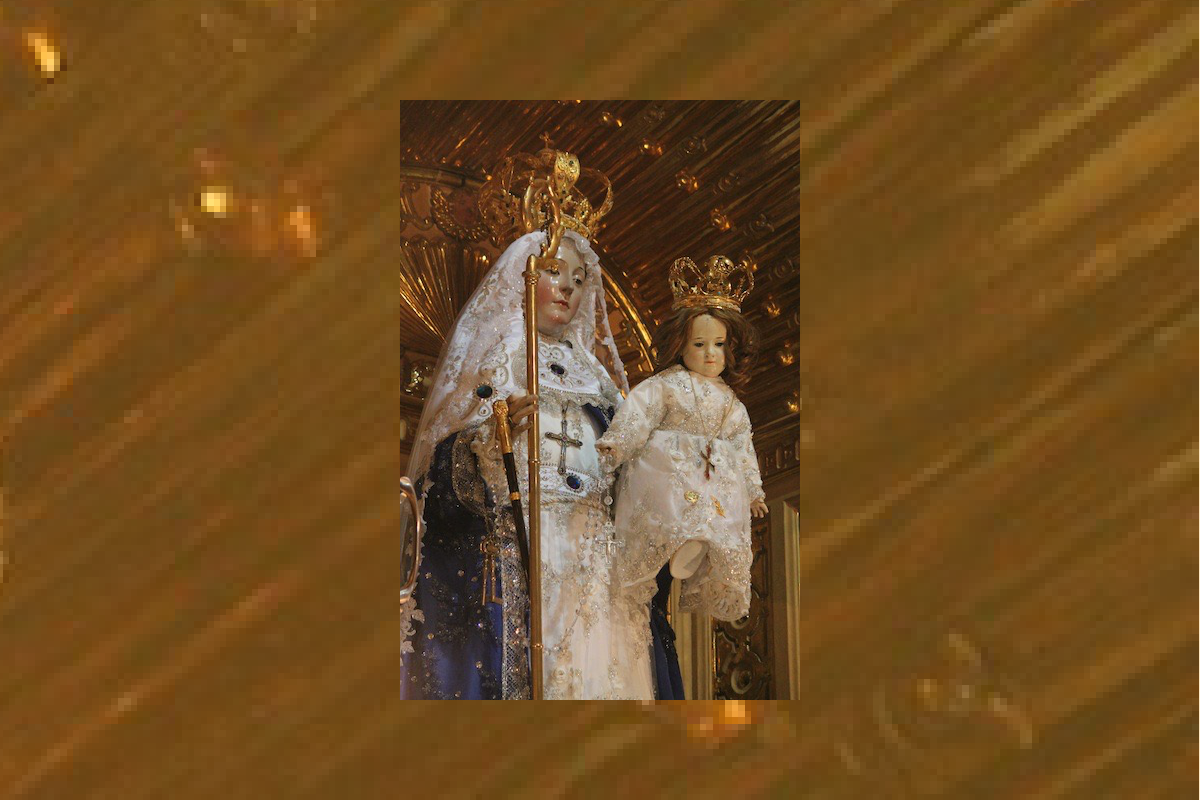
            A beautiful Lady appeared before Mother Mariana. She was holding the Child Jesus in her left arm, and held in her right hand a scepter adorned with precious stones.

            “I am Mary of Good Success, the Queen of Heaven and earth … I hold in my right hand the scepter that you see, since I wish to govern this my convent as Prioress and Mother. The Franciscans are ready to give up the government of this convent, which needs, more than ever, in this hard trial which will last for centuries, my patronage and protection. Satan has begun to try to destroy this work of God by availing himself of my ungrateful daughters, but he will not succeed because I am the Queen of Victories and the Mother of Good Success, under which invocation I wish to perform miracles in every century, for the benefit of this convent of mine and its inhabitants … Your life will be long for the glory of God and of His Mother who speaks with you. My Blessed Son will submit you to all kinds of sufferings, and in order to instill you with the courage that you need, take Him from my arms and receive Him into yours.”

            At this point, the Virgin placed the child into Mariana’s arms, “who held Him close to her heart and lavished Him wish signs of affection.” Mother Mariana would need this supernatural consolation to prepare for the days to come.


The Franciscans Depart, Mother Mariana Persecuted


            The time arrived to elect a new prioress, and Mother Jesus Valenzuela was chosen. Mother Valenzuela was weak in character and gave in to the demands of the non-observant sisters. She quickly arranged the departure of the Franciscans and transferred convent governance to the bishop.

            As a result, writes Father Pereira, “The observance of the Rule began to decay, strict silence disappeared, and lapses occurred in the matter of enclosure. In short, the relaxation of monastic perfection had begun.”

            Mother Mariana asked Mother Valenzuela to rein in the wayward religious. These nuns, however, under the leadership of one who came to be known as La Capitana, wrote the bishop making false accusations against Mother Mariana, including the claim that Mariana was interfering with the governance of the community.

            The bishop responded by sentencing Mariana to the convent prison for three days, a punishment that included the removal of her veil and other humiliations. After her imprisonment, Mariana was the placed in a wretched little room and forbidden all communications with other nuns. 

            The six other Spanish foundresses, along with eight other observant nuns clearly recognized this travesty for what it was, and visited Mother Mariana anyway. The wayward nuns complained to the bishop. He responded with a new document that ordered the fifteen nuns to a month’s imprisonment.

            Other good nuns, scandalized by the injustice, risked the scorn of the rebels and visited the imprisoned nuns. These too were thrown into the convent prison, so that the number of faithful nuns in prison rose to twenty-five.

            We cannot help but see in this a veiled foreshadowing of the Conciliar crisis of Faith in our time, wherein wayward and modernist prelates, who are “non-observant” in the traditional Faith, persecute and effectively “outcast” true Catholics who preserve the Faith of all time.

            While in the convent prison (a description of which will be included in next month’s installment) the Mothers received supernatural consolations and reassurances. Some of these are  as follow:

            Mother Mariana was granted a vision of Golgotha, wherein in Our Lord told her His wounds were due (in part) to the nonobservant sisters. He also complained of the dismissal of the Franciscans, and said that Mother Valenzuela, after death, would remain in Purgatory until Judgment Day.

            Mother Francisca of the Angels saw (in vision) St. Francis of Assisi with bow and arrows going through the cloister and shooting arrows right and left. “One of the arrows hit the heart of a sister who died instantly.” St. Francis revealed that this sister was a principle agitator in the removal of the Franciscans. The next morning the body of the sister was found with a black and blue face. Most of the other sisters did not know the sudden death was a direct punishment from St. Francis.

            The other Foundreses who were cast into prison –  Mother Ana of the Conception, Mother Lucia of the Cross, Mother Magdalena of Saint John, Mother Catalina of the Conception, Mother Maria of the Incarnation ­– were also graced with consoling visions.

            In the meantime, Mother Valenzuela became stricken with remorse at seeing the innocent nuns imprisoned. She wrote a letter to the bishop declaring herself guilty of negligence “for being manipulated by the nonobservant nuns,” and asked that Mother Mariana’s priorship be reinstated.

            The bishop responded by reprimanding Mother Venezuela and ordering the release of all the nuns, but he left Mother Venezuela as prioress.


Second Imprisonment


            Mother Mariana was again elected Prioress in 1598 after the term of Mother Valenzuela expired, despite receiving not a single vote from the wayward nuns. One of these nuns left the celebration of the new prioress and planned to form a parallel community. This nun was struck dead the same night, but Mariana’s troubles were far from over.

            The nonobservant nuns, after a month of Mother Mariana’s priorship, sent a note to the bishop calumniating her. They claimed she conversed with Franciscan friars until late at night, said she seeks to do away with the bishop’s rule, and asked that she be imprisoned.

            The bishop seemed too willing to believe these missives without his own investigation. He immediately suspended Mother Mariana’s priorship and ordered her imprisonment. Over the next few days, the rebel nuns, under various pretexts, imprisoned all the Spanish foundresses.

            This greatly distressed Mother Valenzuela. Though ill, she reprimanded the non-observant nuns and tried to write to the bishop, but the bad nuns assured the note was never sent. Once again, laxity at the convent prevailed.


Third Apparition: January 16, 1599


            We now arrive at the third apparition of Our Lady of Good Success, which took place five years after Our Lady’s second appearance. This vision occurred shortly after midnight on January 16, 1599, while Mother Mariana and the other holy nuns were still in the convent prison.

            The Virgin said, “My very beloved daughter, why are you downcast and heavy of heart? That which you have before your eyes is not an imaginary illusion. I am Mary of Good Success, your Mother in Heaven, to whom you always have recourse with this invocation known in Spain … The tribulation whereby today my Blessed Son tries you is a Heavenly gift with which souls fortify themselves and hold back the Divine wrath, ready to let loose a dreadful punishment upon the ungrateful colony. How many hidden crimes are committed in its cities and towns!

            “Precisely for this reason the convent was founded in this place in which He is offended and unknown … instruct your daughters and instill in those present and in those who will come, the love of their divine vocation and of the place that God and I have chosen as our possession and inheritance  … In every century I will live there, exteriorized in some of my beloved daughters. Here, in the middle of the hustle and bustle of the ungrateful world, God will have some contemplative spouses worthy of His Majesty; those who, in obscurity, in silence, in humiliation and in contempt … will be powerful in appeasing Divine justice and in obtaining great benefits for the Church, country, and souls.

            “Within a short time the country in which you live will cease being a colony and will be a free republic. Then it will be known by the name of Ecuador, and will need heroic souls to sustain it in the midst of so many public and private calamities.

            “God will always find here those souls, as if they were hidden violets … and no powerful monarch in the world will be able, with his treasures, to build new buildings in this place, which is God’s possession … The forces of man against the Lamb of God are vain! I will look after this convent with maternal solicitude … and if it would be necessary to hold up with miracles the walls which protect the cloister, I will hold them up…

            “A truly Catholic president will come in the nineteenth century, a man of character, to whom Our Lord God will give the palm of martyrdom in the plaza where this convent of mine is. He will consecrate the republic to the Divine Heart of my Blessed Son. This consecration will uphold the Catholic religion in subsequent years, which will be tragic for the Church.”

            Comment: It is clear this prophecy was fulfilled in President Garcia Moreno, who solemnly consecrated Ecuador to the Sacred Heart of Jesus on March 25, 1874, the feast of the Annunciation. Ecuador was the first country in the world to do this, and President Moreno was inspired to enact this consecration after learning of Our Lord’s original request to the King of France. A year after the Ecuador consecration, on August 6, 1875, Garcia Moreno was brutally assassinated by agents of the revolution in the Plaza of Quito, which is at the foot of the presidential palace and directly across from the convent of the Immaculate Conception.


Make a Statue


            Our Lady’s words continue, “In those years, in which Masonry, that accursed sect, will take control of the civil government, there will be a cruel persecution of all religious communities and it will also be violently launched against this convent of mine. In the opinion of those ungrateful men, the convent shall be closed, but as God lives and I live … we will place difficulties impossible to vanquish, and the triumph will be ours.

            “For this end it is My Blessed Son’s will that you yourself order a statue of me to be made, just as you see me, and you will place it above the seat of the prioress, so that from there I may govern my convent, by your placing in my right hand the scepter and the keys of the cloister as a sign of ownership and authority.

            “You will have my Divine Child placed in my left arm: firstly, so that mortal men may understand that I am powerful in appeasing Divine justice and in obtaining devotion and pardon for every sinful soul who comes to me with a contrite heart … And secondly, so that in every century, my daughters may understand that I show and give them my Blessed Son and their God as a model of religious perfection…

            “The separation of the Franciscans at this time was by Divine permission … But, after a few centuries have passed, they will return to govern this beloved flock of mine … that prelate, my beloved son, will be happy and rewarded by God here on earth, he who … will ask the vicar of my Blessed Son here on earth, that the Franciscans govern this convent. This day will be when the corruption of moral behavior in the world seems to have reached its peak …

            “Happy, fortunate and much loved by God will be my daughters of that time, who… show their desire of submission to the Franciscans, in their compliance with their Rule , and to that bishop, my beloved son. Their names will be written in the Most Sacred Heart of Jesus …” [Note: this return of the Franciscans has yet to occur.]

            Mother Mariana answered her, “Lovely Lady, your beauty enchants me… But allow me to tell thee that no human being, no matter how knowledgeable in the art of sculpture, could make thy enchanting image in wood, with every detail, the way thou askesth me … I would not know how to explain or even know and give the measurement of thy height.”

            The Virgin answered her, “Let nothing frighten you, my daughter; approach my feet. My servant Francisco, with his wounded hand, will make my statue and the Angelic Spirits will be his skilled workers, and he himself will put his cord on me… Regarding the measurement of my height, you yourself measure it with the Franciscan cord which you wear around your waist…”

            The nun replied, “Lovely Lady, my dear Mother, shall I, who am an earthly creature, dare to touch thy Heavenly forehead, when not even the Angels can do this? …”

            The Virgin answered, “Your humble fear delights me and I see your ardent love for your Mother from Heaven who is speaking with you; bring and put your cord into my right hand, and you, with the other end, touch my feet.”

            Mother Mariana, trembling with reverence, did as the Virgin ordered her. The Virgin gave her the other end of Her cord, which had miraculously stretched to reach Her height, and said to her, “Now you have, my daughter, the measurement of your Mother from Heaven. Give it to my servant, Francisco del Castillo, explaining to him my features and my posture. He will exteriorly make my statue because he has a delicate conscience and scrupulously observes the Commandments of God and of the Church; no one else will be worthy of this grace. You, for your part, help him with your prayers and with your humble suffering.

            “Soon you will leave this prison … Wake up your sisters now out of their sleep, so that … in your company they may offer up the morning recitation of the Little Office which pleases me so much …”

            Our Lady then disappeared. Mother Mariana lit the candles to awake her sleeping sisters. The nuns immediately applied themselves with extraordinary fervor to the recitation of the Little Office of the Blessed Mother.

            Though the nuns were grateful for this extraordinary consolation, the worst confrontations between Mother Mariana and La Capitana were yet to come.


– The material on these accounts comes from The Story of Our Lady of Good Success and Novena, An Abridgment of the book written by Rev. Father Manual Sousa Pereira [Dolores Press, 2013]; and The Admirable Life of Mother Mariana, Vol. I, Father Manual Sousa Pereira, translated by Marian T. Horvat, Ph.D., [Tradition in Action, 1999]. Father Pereira’s original work was written in Spanish in 1790. In all quotations, emphasis added by JV.

Posted on Leave a comment

The Miraculous Life of Mother Mariana de Jesus-Part 2


Herald of Our Lady of Good Success


  by John Vennari


            One night, not long after Mother Mariana’s entered her year of Novitiate, she was in prayer before the tabernacle. She suddenly heard an overpowering sound and the entire church became shrouded in darkness.

            Not knowing what this was or why it happened, she reflected if perhaps her own sins were responsible for frightening prodigy. She had made her profession in Quito on October 4, 1579, was a model of prayer, kindness and religious observance, and took upon herself the most arduous penances. Yet in her humility, she thought perhaps it was through some fault of hers that darkness enveloped the Church.

            Looking up, she then beheld the main altar illuminated, followed by a vision Jesus Crucified, along with Our Lady, Saint John and Saint Mary Magdalene. The suffering Christ began His death agony.

            “My Lady, am I guilty?” asked Mother Mariana.

            “You are not guilty,” responded the Virgin, ”but rather the sinful world,”

            As Our Lord continued His agony, the little nun heard the voice of the Eternal Father, This punishment will be for the twentieth century.”

            Over the head of Our Lord, Mother Mariana saw three swords. On each was written, I shall punish heresy, blasphemy and impurity.” She was given to understand these would be the great sins of that century.

            Our Lady asked her, “My daughter, will you sacrifice yourself for the people of this time?” The little nun responded, “I will.” The three swords then moved from the suffering Christ and plunged into the heart of Mother Mariana, who fell dead to the ground.

            Her sisters found her body cold, lifeless on the lower choir floor. Doctor Sancho was summoned. “Mother Mariana is dead,” exclaimed the tearful doctor, “Her beautiful soul has left the lovely abode of her body. Call an artist so that her portrait may might be painted before she is buried.”

            News of the death immediately rippled through Quito. Theologians from the Franciscans, who were still overseeing the order, arrived on the scene along with the Abbess at the time, Mother Maria de Jesus Taboada. The mysterious nature of Mother Marianna’s death then began to emerge. The artist who had been called to paint her portrait arrived, but, in the words of her biographer Father Pereira, “could not enter, prevented by an inexplicable force.”

            Though Mother Mariana had indeed died and had been presented before the judgment seat of Heaven, her work on earth was not yet over. The Father Superior, inspired by God, commanded, “Mother Mariana, I order you in the name of holy obedience, that if you are dead, your soul return to your body so that it may live and you may be able to tell us what happened.”

            Immediately Mother Mariana resumed breathing and opened her eyes. Father Superior told her to relate everything that happened, to which the little nun recounted the remarkable happening.

            At her death, Mother Mariana was presented before God’s judgment and found blameless. She then prostrated herself before the Most Blessed Trinity, and was given an elevated understanding of this ineffable mystery. As Father Pereira relates: “The Eternal Father rejoiced for having created her, the Divine Son for having redeemed her and taken her for His spouse, and the Holy Ghost for having sanctified her.”

            Our Lord Jesus Christ presented Mother Mariana with two crowns: one of glory and unspeakable beauty, the other of lilies surrounded by thorns. “Choose one of these crowns,” Our Lord said to her. Mother Mariana understood that choosing the glorious crown would grant her immediate access to heaven, and choosing the crown of the thorns would mean her returning  to the world.

            At that moment she was given to understand remarkable details of the future; she would know of all the nuns at the convent from then until the end of time; their names and offices; those who would remain faithful and those would not; that she would become mistress of novices; that the Franciscan Friars would be removed from governing the convent and the anguish that would result, and countless other particulars about the convent until the end of time.

            Our Lady said, “My daughter, I left the glories of Heaven and came down to earth in order to protect my children. I would like you to imitate me also in this and return to life, since your life is very necessary for the Order of my Conception. Woe to the Colony [Ecuador] in the twentieth century, in which this land will be blameworthy! If souls are not found to appease Divine Justice with their life of immolation and sacrifice, fire will rain from the sky, by consuming its inhabitants, the land of Ecuador will be purified.”

            Mother Mariana believed she was not fit for the office of Novice Mistress, but Our Lady replied, “Daughter of my heart, Do not fear. You will not, strictly speaking, be the mistress. Through you I will transform your novices into religious saints…”

            With this, Mother Mariana chose the crown of thorns and was returned to the world, having offered herself a victim soul to God for the sins of men, and in particular for the sins of the twentieth century.

            We recall that elsewhere Our Lady warned Mother Mariana, “At the end of the nineteenth century and for a good part of the twentieth century, various heresies will be spread in this land,” and that “passions will erupt,” the “atmosphere will be saturated with the spirit of impurity,” “childhood innocence will scarcely be found,” and “the Church will suffer a dark night.” Mother Marina offered her life of suffering for those of us living in our time – and her suffering would be immense.

            It is this understanding of Mother Mariana’s profound connection to our day that draws countless souls to Our Lady of Good Success, and to visit the Conceptionist convent in Ecuador.

            As related last month, I was privileged to visit Quito from January 28 to February 4 earlier this year, to mark the 25th Anniversary of the Canonical Crowning of the Miraculous Statue. I was also privileged to visit the convent and venerate the incorrupt body of Mother Mariana.

            We are now running a series of articles on this remarkable story not only for its own sake, but as a remedy to the chronic reports of scandal and heresy within our beloved Catholic Church. May this series provide a kind of spiritual oasis within pestilential desert of the post-Conciliar period. As prophesied by these apparitions, “Heresy, blasphemy and impurity” are the great sins of our age. The true stories we relate hear are meant to refresh and inspire, and give us a break from the constant stream of bad news.

            Though these episodes are inspiring for us, they were often difficult for those who lived through them, as we is evident in the sea voyage from Spain to the Quito.


The Call from Ecuador


            The Order of the Immaculate Conception – the Conceptionist Order  – was found by Saint Beatriz da Silva in Portugal in 1484, eight years before Columbus discovered the New World. The Conceptionists were founded in accord with the explicit desire of Our Lady who said, “Beatrice, I would like you to found a new Order in honor of My Immaculate Conception [whose religious will be] clothed with a white habit and a blue mantel, as I wear.”

            Readers will recall from last month: Mother Mariana, at the time of her death, predicted that Saint Beatriz would be canonized in the 20th Century. This came to pass on October 3, 1976, when she was canonized by Pope Paul VI.

            There was a Conceptionist Convent in Spain – the mother country of Ecuador – and the pious matrons of Quito knew it. In 1556, they petitioned civil and ecclesial authorities to establish an order of Conceptionist in their city. Quito itself was founded in 1534, and had already imported various religious orders such as the Franciscans, Mercedarians and Dominicans. Nonetheless the influential ladies of the city desired a Conceptionist Convent in their midst.

            In 1575 the request was approved, and an appeal dispatched to King Phillip II of Spain who granted the petition. The Sovereign arranged five nuns from the Conceptionist convent in Galicia to travel to Quito. One of these nuns – the Superior – was the king’s cousin, Mother Maria de Jesus Taboada.


Perilous Sea Voyage


            The group of Conceptionist set sail from Spain to South America in 1576, two hundred years before the signing of the U.S. Declaration of Independence.  According to the account by Father Pereira, along with them came a remarkable 13-year old named Marina Francesca Torres y Berriocha.

            This young girl, who was the niece of Mother Taboada,  had already been favored with supernatural manifestations. At age nine, when Mariana Francesca received First Communion, Our Lady communicated to her that she was destined to be a Conceptionist sister, and that Heaven wanted her to join the new convent in Ecuador. “Leave behind your country and the house of your parents,” Our Lord told her, “because the King of Heaven is enamored of your beauty.”

            Young Marianna agreed to this sacrifice, and in 1576 set on voyage with the five founding Mothers.

            A violent storm broke out at sea that threatened to destroy the ship. The nuns on board prayed for safety and deliverance.  At one point young Mariana screamed and fainted, and the nuns continued to beseech Heaven in the face of the terrifying storm. When Mariana awoke, she heard a horrible voice shriek, “I shall not permit the foundation. I shall not permit it to go forward. I shall not permit it to endure until the end of time, and I shall persecute it unceasingly.

            Mariana later explained to the sisters that the shout came from a colossal serpent, “a horrible, writhing creature.” She comforted the nuns saying, “I also saw a Lady of incomparable beauty, clothed in the sun and crowned with starts, carrying a beautiful child in her arms. Over the heart of this Lady was a monstrance with the Blessed Sacrament. In one of her hands she carried a large cross of gold, which at its end took the shape of a lance. With this she subdued the enormous serpent with its two-edged tongue. The Lady, who wielded the cross with the help of the Blessed Sacrament and the hand of the Child, struck the head of the serpent with such force that it was slashed to pieces. At that moment, this monstrous serpent cried out that it would not permit the foundation of the Order of the Immaculate Conception.”

            Mother Maria Taboada, impressed with this vision, eventually arranged a picture drawn of this scene of the Virgin holding the Child Jesus, which would then be made into a cloth medallion that the Conceptions wear on their bosom of their habits.

            At the time, however, Mother Taboada did not hide her consternation. If such hellish turmoil was in store, would it not be better they return to Spain and abandon the idea of a Quito foundation? Mariana responded that the Convent would receive the protection of Our Lady until the end of time.

            The nuns persevered in their journey and arrived at Quito on December 30, 1576. The Convent was formally founded on January 13, 1577, under the Franciscan Friars. Soon young woman seeking religious life knocked at the convent door. Many of these women would be a blessing to the Order, but some would be a scourge.


Her Offices and Miracles


            After Mother Mariana’s “first death” related earlier (for there would be a second in 1589, and then her final death in 1635) she continued in her religious life and was a model of goodness and virtue, which won her the admiration of the other sisters. Her life was one of constant miracles and extraordinary events. Father Periera, who tells her story, lists the various posts she held in the convent. There are miraculous occurrences attached to each of them.

            When she held the office of Infirmarian, a young nun burnt her face and hand to the bone. Mother Mariana prayed assiduously and within a month, the burn was completely cured.

            She then held the office of Bursar. At this time, Father Pereira writes, “When there was not enough bread for the convent inhabitants, what they had would be multiplied in her hands.” When the convent suffered from a material need, Mother Mariana would pray before the tabernacle. The convent would soon be the recipient of sufficient alms.

            When she was Sacristan, her guardian angel once awoke her to report the tabernacle light had gone out. Mother Mariana immediately arose and relit the lamp.

            When she was Portress, communicating with people at the convent turnstile, Mother Mariana was responsible for numerous and miraculous conversions.

            She also fulfilled the office of Choir Mistress, and was a model of perfection in praying the Divine Office, always punctual and recollected. One day while she was cleaning the choir seats, deceased religious sisters appeared to her confessing they were being punished in Purgatory because they prayed little, or broke their silence in choir, or entertained distractions while in prayer. Mother Mariana prayed for them and their pains were alleviated.

            In time, as she was foretold at her “first death,” Mother Mariana was appointed as Mistress of Novices. We recall the promise of Our Lady, ““Do not fear. You will not, strictly speaking, be the mistress. Through you I will transform your novices into religious saints…”

            On becoming Mistress of Novices, she received three novices and four postulants, and guided them with supernatural care. She governed and formed souls so well that they quickly grew in virtue, and many more postulants sought entrance.

            Mother Mariana had supernatural foreknowledge of her novices lives. She knew when and how each of them would die. To sisters whom she knew would die before her, she said, “My daughter, I shall not leave your bedside until I have delivered your soul into the hands of God Our Lord.” To those who would die after her, she would plead, “My daughter, when death approaches, do not forget your Mother.” She understood the interior of each of the novices placed in her care.

            No sister could conceal a fault from Mother Mariana. With great sweetness, Mother Mariana would call such a soul aside to say, “My daughter you committed such-and-such a fault today, your broke silence in such-and-such a place, saying these words … Let us go now and do penance.” She would then kneel down with the sister to beg the Lord’s pardon.  Mother Mariana was always the first in example, observing the Holy Rule in its strictest detail, and always radiating charity and sweetness to her novices and all the sisters.


First Apparition and Second “Death”


            This brings us to what is called the First Apparition of Our Lady to Mother Mariana, February 2, 1589. The prodigy began in a frightening manner. Mother Mariana was in bed suffering both physical and spiritual anguish, undergoing an intense dark night of soul. She beheld the terrifying vision of serpent slithering upon the wall. The frightened religious cried out to Our Lady, “Star of the Saw, Mary Immaculate … Save me for I perish.”

            She was immediately surrounded by a heavenly light, an affectionate hand touched her head. A Heavenly Lady said, “Why do you fear, my daughter? Do you not know that I am with you in tribulation? Rise up and look at me.”

            Mother Mariana did so and asked, “Who are you, beautiful Lady?”

            The vision responded, “I am the Mother of Heaven whom you invoke. I have come to dissipate the darkness of the night of your soul. You see now what Hell is, for you have experienced it, but you shall remain their no longer. I will place you in Purgatory that you may finish purifying your soul, for your Lord and God has destined you for great and auspicious things during your lifetime.”

            Our Lady then revealed that Mariana’s dear Aunt, Mother Maria Taboada, would soon end her mortal life. “She will receive her reward for the many sacrifices and suffering she has endured over the foundation of this Convent, which I love with all my Heart.”

            The Blessed Mother warned Mother Mariana of the persecution the convent would suffer in the future, but also foretold of many holy religious who would sustain the Convent and the rule.  As promised, she then sent Mariana her mysterious “Purgatory” from which she suffered for seven months.

            At 9:00 am,  September 12, 1589, Mariana received Extreme Union and at 6:30 that evening the holy religious died. Doctor Sancho, the convent physician, bore witness to her death. The sisters prepared her body, funeral preparations were underway, great sadness enveloped the house.

            The next morning, when the nuns entered the upper choir to chant the Little Office, they were stunned to behold Mother Mariana praying. This caused quite a stir. “Frightened,” writes Father Pereira, “the sisters began to take flight, but Mother Mariana called out to them, ‘I am alive. Why do you fear, you who have loved me so dearly?”

            After a certain amount of calm was restored, Mother Mariana prayed with her aunt, assuring her she was indeed alive.

            She then related to Mother Taboada and to her Franciscan confessor what happened during her death. Our Lord placed her in a spiritual Purgatory to undergo further expiation until 3:00 am, at which time her soul returned to her body “communicating to it all of her former vigor and health.” Those who behold her noted her rosy cheeks and healthy appearance.

            Doctor Sancho was summoned to the convent but refused to go, believing the sisters had gone mad from exhaustion. He set out for the Franciscan monastery to urge the Friars to bury the body as soon as possible. Finding no one at the Friary, the doctor redirected his steps to the Conceptionist convent and was stunned to find Mother Mariana alive and strong. Father Peira writes that Doctor Sancho, “along with the Franciscan priests who were present and the Community of sisters, made a solemn oath of what had taken place. These testimonies are preserved in the archives of the Convent.”

            All of these remarkable happenings occurred before the Virgin revealed herself as Our Lady of Good Success, before She requested the statue be made, and before the intense persecution Mariana would undergo inside the convent by non-observant sisters, led by a wayward nun who came to be known as El Capitana.

            We have also yet to mention the repeated visitations of the Archangels Michael, Gabriel and Raphael throughout Mariana’s life. These topics will be introduced next month.


            – The material on these accounts comes from The Story of Our Lady of Good Success and Novena, An Abridgment of the book written by Rev. Father Manual Sousa Pereira [Dolores Press, 2013]; and The Admirable Life of Mother Mariana, Vol. I, Father Manual Sousa Pereira, translated by Marian T. Horvat, Ph.D., [Tradition in Action, 1999]. Father Pereira’s original work was written in Spanish in 1790. In all quotations, emphasis added by author.


Posted on Leave a comment

A Visit to the Miraculous Statue of Our Lady of Good Success – Part 1 of 3

Quito, Ecuador – Prophecies and Hope

            By John Vennari

“At the end of the nineteenth century and for a good part of the twentieth century, various heresies will be spread in this land,” warned Our Lady of Good Success to Mother Marina de Jesus Torres in 1634. 

Our Lady prophesied, “Passions will erupt and there will be a total corruption of customs.” In this period of great crisis of Faith in the Church and world, “the atmosphere will be saturated with the spirit of impurity, which, like an unclean sea, will spread through the streets, plazas and public places with an astonishing liberty, there will be almost no virgin souls in the world.”

“In these fateful times,” She continued, “childhood innocence will scarcely be found, in this way vocations to the priesthood will gradually disappear.”

She foretold that among the secular clergy, there will be “much to be desired in this period, because priests will neglect their sacred duties … the Church will suffer a dark night.

This is but a sample of the remarkable prophecies given by Our Blessed Mother to Mother Mariana de Jesus Torres. 

The story of Mother Mariana and the statue of Our Lady of Good Success took place in the Conceptionist Convent in Quito, Ecuador, from approximately 1579 to 1635. It is an astonishing chronicle of miracles, prophecies, inspiration, warning and hope.

The entire account enjoys the full approval of the Catholic Church, and has direct implications to the crisis of Faith in our time, which Our Lady calls a period of “almost complete decadence.”

From January 28 to February 4 of this year, I had the privilege of traveling to Ecuador for the February 2 Anniversary of the Canonical crowning of the miraculous statue. 

At Quito –  in the convent chapel, or in the presence of the miraculous statue, or in the company of knowledgeable souls who relate the astounding story, or absorbing the unique Catholic history, or kneeling before the incorrupt body of Mother Mariana, or the combination of all of the above – one has the sense of arriving at a contact point between Heaven and earth. I have visited various Catholics shrines around the world, but have yet to encounter anything like Quito and its Conceptionist convent. It is a place where, if we may speak thus, the supernatural seems to become tangible. 

Remarkable Prophecies

Before we even relate the story of Mother Mariana, her sufferings as a victim soul for the twentieth century, the rebellion of the non-observant sisters, the completion of the miraculous statue by the angels, her dying three times, her communication with saints and angels throughout her life, her countless other fascinating prodigies, and the thematic connection between Our Lady of Good Success and the Message of Fatima, it is best to establish the credibility of these miraculous happenings by listing some of the most remarkable prophecies of Our Lady of Good Success. These prophecies have come to pass in stunning detail. 

Here is a kind of Top 10:

1) Independence of Ecuador

On January 16, 1599, Our Lady told Mother Mariana, “Within a short time the country in which you live will cease being a colony and will be a free republic. Then it will be known by the name of Ecuador, and will need heroic souls to sustain it in the midst of so many public and private calamities.”

On May 24, 1822, the battle that achieved Ecuador’s Independence from Spain was fought at Mount Pichincha, a mountain that overlooks Quito and the Conceptionist convent.

2) A “Truly Catholic President”

On the same date in January 1599, Our Lady foretold, “A truly Catholic president will come in the nineteenth century.”

It is universal recognized this prophecy was fulfilled in the remarkable figure of Gabriel Garcia Moreno of Ecuador. Not only was he a courageous Catholic statesman who worked to build  a healthy nation in accord with natural and divine law, he is also regarded as the fulfillment of Our lady’s prophecy because of the next two details:

3) The Consecration of Ecuador to the Sacred Heart of Jesus

Our Lady said of this Catholic president, “He will consecrate the republic to the Divine heart of My Blessed Son. This consecration will uphold the Catholic religion in subsequent years which will be tragic for the Church.”

It was Garcia Morena who arranged the solemn Consecration of Ecuador to the Sacred Heart, which took place at the cathedral in Ecuador on March 24, 1874. President Morena was the first Catholic leader in history to enact such a national consecration.

4) The Assassination of the Catholic Leader and the Place of the Assassination

As part of the above-mentioned 1599 prophecy, Our Lady said of this Catholic president,  “Our Lord God will give palm of martyrdom in the plaza where this convent of mine is.”

On August 6, 1875, a little more than a year after the National Consecration to the Sacred Heart, Garcia Moreno, fiercely hated by Freemasons, liberals and leftists, was macheted to death in the main plaza of Ecuador, which adjoins the Conceptionist convent of Mother Mariana.

5) The Dogma of the Immaculate Conception

  The Child Jesus prophesied to Mother Mariana on February 12, 1634: “The dogma of faith of My Mother’s Immaculate Conception will be proclaimed when the Church is fought against more, and My Vicar is a captive.”

Blessed Pope Pius IX, who had been made a prisoner in the Vatican due to the Masonic revolution in Italy, proclaimed the de fide Dogma of the Immaculate Conception on December 8, 1854.

6) The Dogma of Papal Infallibility

On December 8, 1634, while explaining to Mother Mariana a vision of the archangels Michael, Gabiel and Raphael, Our Lady prophesied as follows. “The Archangel Gabriel also carries a ciborium … full of hosts, which signify the most august Sacrament of the Eucharist which will be distributed by my Catholic priests to the Christian faithful belonging to the Catholic, Apostolic and Roman Church, whose visible head is the Pope, the king of Christendom; whose papal infallibility will be declared a dogma of the faith by the pope who is destined to declare as a dogma the mystery of my Immaculate Conception; who will be persecuted and imprisoned in the Vatican due to the unjust usurpation of the Papal States through an earthly monarch’s wickedness, envy and avarice.”

The Dogmatic Constitution Pastor Aeternus on the infallibility of the Pope was promulgated by Vatican I under Pope Pius IX on July 18, 1870, the same persecuted pontiff who defined the dogma of the Immaculate Conception.


7) The Dogma of the Assumption

In the above-mentioned 1634 prophecy, the Child Jesus foretold, “The de fide dogma of My Blessed Mother’s Passage and Assumption in body and soul to Heaven [will be defined] in the same way. But you, My spouses and chosen souls, ought to believe it always, as if it were already a dogma.”

More than 300 years later, on November 1, 1950, Pope Pius XII solemnly defined the dogma of the Virgin Mary’s Assumption in body and soul into Heaven.

8) The Canonization of Mother Beatrice of Silva


The Order of the Immaculate Conception, Mother Mariana’s order, was founded in 1484 in Portugal by Mother Beatrice de Silva. On January 16, 1635, Mother Mariana, just before she died, foretold “Beatrice de Silva… will be raised to the altars in the twentieth century.”

This prediction came to pass. Beatrice de Silva was beatified by Pope Pius XI in 1926, and canonized by Pope Paul VI on October 3, 1976. 

9) Fire in Chapel

On Holy Thursday, 1624, while Mother Mariana was in prayer, she saw in a vision that during the middle of the nineteenth century, on the night of Holy Thursday, the main altar of her church was burning in a dreadful fire, and that the fire would start by the influence of demons.

This prophetic vision was fulfilled more than 200 years later on Holy Thursday, 1878, when a fire broke out in the convent church as a result of kerosene lamps. The subsequent chaos that ensued among the people and the sisters caused substantial harm to the church, the choir and the church’s artwork.


10) Mother Mariana would not be known until the twentieth century

On February 2, 1610, when Our Lady commanded that Her statue be made, Mother Mariana responded with the request that her own name be unknown, so as to focus all attention to the devotion towards Our Lady of Good Success.

Our Blessed Mother responded, “Regarding your name, your request pleases me… Tell the bishop for me that it is my Blessed Son’s and my will that your name be concealed from everyone, both within and without the cloister, because at the present time it is fitting that non one be told how and whence came the idea of making the statue, because this knowledge is reserved for the general public of the twentieth century.”

Mother Mariana and the full story of Our Lady of Good Success remained virtually unknown for centuries. The story slowly came to light after the 1875 assassination of Garcia Moreno, and emerged even more into the public eye in 1906. On February 8 of that year, while remodeling the convent, the casket in which Mother Mariana was buried in 1635 was opened, and her body was found incorrupt.  Other happenings, such as the 1941 miracle of Our Lady of Good Success, and events connected to the post-Conciliar crisis of Faith, resulted in the story of Mother Mariana being better known by “the general public of the twentieth century.”

These “Top Ten Prophecies” in no way exhaust the miracles, prophecies and wonders connected to the story of Our Lady of Good Success.  The striking predictions and their fulfillment command our attention like few other prodigies in Church history. We are compelled to take the story seriously, and to study it more closely.

Confirmation and Consolation

The remarkable history of Our Lady of Good Success is both a confirmation and a consolation.

The visions are a confirmation of central components of the traditional Catholic Faith that have been obscured or denied in our time, including the Seven Sacraments and the reverence due them, devotion to Our Lady, reparatory suffering, strict observance of true religious life, heaven, hell, purgatory, the Social Kingship of Christ (indirectly contained in the prophecy about Garcia Moreno), the necessity of maintaining the purity of the Faith, traditional Catholic morality, genuine Catholic education, and intolerance of heresy. The visions do not contain the slightest whiff of the new Vatican II orientation, but continually confirms the Traditional faith of all time.

The visions are a consolation in this manner: we are assured that God is in control, even in this crushing time of universal apostasy. Our Lady consoles us by predicting the unprecedented crisis in which we live, telling us ahead of time what is in store. The crisis does not take Heaven by surprise; the depravity will not prevail in the end. We are told  by means of these visions that the present apostasy constitutes a trial for the faithful, and that the Church will indeed be restored.  Our Blessed Mother said in March 1634 “And to put this faith and confidence of the just to the test, there will be occasions in which, apparently, all will be lost and paralyzed; and then will be the happy beginning of the complete restoration.

To recap the visions of Quito as a no-compromise confirmation of the Catholic Faith of all time, the holy visions contain no hint of effeminate Conciliar slogans such a “dialogue,” “what unites us is greater than what divides us,” or “reconciled diversity.” In fact, the Message is pointedly un-ecumenical. On February 2, 1634, Our Lord thundered the following warning against those immersed in heresy: “A thousand times accursed be the heretics and their followers, who cast doubt on the mysteries concerning Me and My Mother! May they be accursed! And may the center of the earth be their eternal dwelling place, together with the Father of Lies, Lucifer, and his followers, in the midst of fire created by Divine wrath for the rebellious Angels and the men who follow them, departing from the truth, outside of the Catholic Church.”

“Woe to the Children of These Times”

We intend to continue with a serious of CFN articles on Our Lady of Good Success. There is much to relate. In this first introductory piece, along with establishing the veracity of the prophecies, we spotlight the striking warning of Our Lady for our time given in 1610.

While the reported visions are mostly clear and to the point, some of the details acan be shrouded in mystery. At times, one might be tempted to believe these prophecies only concern the country of Ecuador, as this nation features prominently in Our Lady’s communications. However, as the eminent Father Vincent Miceli taught, prophecies are usually clearest to those who live through their fulfillment. There is no doubt that not only Ecuador, but the entire world now groans under the apostasy foretold by Our Lady of Good Success.

What follows is an extended quotation of Our Blessed Mother from January 21, 1610: “…[A]t the end of the nineteenth century and during most of the twentieth century, in what is now a colony and will then be the Republic of Ecuador, passions will erupt and there will be a total corruption of customs, for Satan will reign almost completely by means of the Masonic Sects and they will focus principally on children in order to sustain this widespread corruption.

“Woe to the children of these times! It will be difficult to receive the Sacrament of Baptism and also the Sacrament of Confirmation. They will receive the Sacrament of Confession only if they remain in Catholic schools, for the devil will make a great effort to destroy these schools, by making use of persons in authority.

“The same will happen regarding Holy Communion. How it pains me in telling you that there will be many and enormous public sacrileges, and also hidden profanations of the Sacred Eucharist! Many times during this period, the enemies of Jesus Christ, instigated by the devil, will rob sacred Hosts in the cities, with the sole purpose of profaning them. My Blessed Son will be thrown to the ground and trampled upon by dirty feet…

  “But at that time they will finally know you, and they will know the favors that I have conferred upon you… Together with this knowledge will come the love and veneration of my sacred image about which I strictly order you today: give orders for making it just as you see me and place it above the seat belonging to the abbess so that from there I may govern and direct my daughters and sustain this monastery of mine, since Satan, making use of good and bad men, will undertake a cruel battle to destroy it…

“During this time, due to the fact that in this poor country the Christian spirit will be lacking, the Sacrament of Extreme Unction will be little esteemed. Many people will die without receiving it, either because of the negligence of their families or their false sentimentality towards their sick relatives; others, also, so as to oppose the spirit of the Catholic Church, spurred on by the accursed devil, will deprive souls in this way of innumerable graces… for making the great leap from time into eternity… Some people will die without receiving it, because of God’s just and secret chastisements.”

“As for the Sacrament of Matrimony, which symbolizes the union of Christ with His Church, it will be attacked and deeply profaned in the fullest sense of the word. Masonry, which will then be in power, will enact iniquitous laws with the objective of doing away with this Sacrament, making it easy for everyone to live in sin, encouraging the procreation of illegitimate children born without the blessing of the Church… The effects of laicized education having increased, priestly and religious vocations will diminish.”

This is a striking prophecy of our time concerning disregard of the Sacrament of matrimony, widespread cohabitation and the soaring rise of illegitimate children worldwide. We see this collapse of morality and family all around us. Keep in mind, this impious breakdown of marriage of was predicted over 400 years ago!

Our Lady continues, “The Sacrament of Holy Orders will be scoffed, subjugated and despised since by subjugating and denigrating God’s Church, one consequently does the same to God Himself, Who is represented by His priests. The devil will endeavor to persecute the Lord’s ministers in every way and will labor with cruel and subtle craftiness to divert them from the spirit of their vocation, corrupting many of them.

“These priests, who in this manner will scandalize the faithful, will cause the hatred of these same faithful and of the enemies of the Catholic, Apostolic and Roman Church to fall upon all priests…

  “Moreover, during those unhappy times there will be unbridled luxury, which, by being an occasion of sin for other persons, will conquer innumerable frivolous souls, which will be lost. Innocence in children will scarcely be found, nor modesty in women, and in that greatest crisis of the Church, he who is obliged to speak in due time will remain silent.”

Elsewhere, Our Lady tells Mother Mariana, “The vices of impurity, blasphemy and sacrilege will abound in that time of depraved desolation, while the one who should speak remains silent.”

Present day Churchmen often stand silent in the face of evil, such as heresy, abortion, ‘same-sex’ marriage and other deviations from the Faith. How often to we exclaim, “Why don’t they oppose this evil?” or ”Why don’t they refuse Communion to pro-abortion politicians?” or “Why don’t they condemn the aberrations of the Faith rampant in modern Catholic schools and universities that that destroys the Faith in our youngsters?” This dereliction of duty in today’s Churchmen is foretold by Our Lady of Good Success.

We also note the devastating impact of godless “laicized education,” predicated by Our Blessed Mother, that educates only the natural man, but either pretends his supernatural end does not exist, or directly poisons the student against the things that pertain to God.

“Lightening Rod”

Our Blessed Mother now speaks of the importance of devotion to Our Lady of Good Success, a devotion She wishes all of her faithful children to practice: “… your daughters and successors… will appease Divine wrath, by having recourse to me under the invocation of Good Success, whose statue I ask for and command you to have made for the consolation and support of my convent and the faithful in that time, a period that will have great devotion to me, who am the Queen of the Church under various invocations.

This devotion will be the lightning rod placed between Divine justice and the corrupt world, to prevent the formidable chastisement that it merits from being let loose upon this guilty land.”

Elsewhere Saint Raphael tells Mother Mariana it is Heaven’s desire that this statue be venerated in subsequent generations, “The Lord has ordered you to have sculpted, as She will tell you, the statue of His Blessed Mother which will be venerated in future centuries.”

Our Lady further promised great graces to those who promote this devotion: “Those who dedicate themselves to the propagation of its title in every century, will be blessed…” (see prayer on *).

For more on this topic, please go to page 15 for the account and photos from my recent visit to Quito.

Next month we will focus on the early years of Mother Mariana, her persecution by the non-observant sisters, her excruciating sufferings for their salvation, and the miraculous story of the Statue itself, commanded to be made by Our Lady and completed with the help of the angels.


1 All quotations in this article are taken from The Story of Our Lady of Good Success and Novena, An Abridgment of the Book Written by Rev. Father Manuel Sousa Pereira, Translated by Reverend Paul M. Kimball, [Camilus: Dolorosa Press, 2013]. The opening quotes are from the remarkable account of “The Sanctuary Light Extinguished,” March, 1634, pp. 77-82.

2 Ibid., p. 18.

3 Ibid.,  p. 73.

4 Ibid.,  p. 91.

5 Ibid.,  p. 73.

6 Ibid.,  p. 102.

7 Ibid.,  pp. 61-62.

8 Ibid.,  p. 47.

9 From seven in the morning, Sunday, July 27, 1941, until three in the morning of July 28, the statue of Our Lady of Good Success was seen moving its eyes. The prodigy was witnessed by more than thirty thousand people and was reported by eight newspapers throughout the country. More on this in future installments.

10 Most people seem to have first heard of Our Lady of Good Success from Archbishop Marcel Lefebvre’s homily on June 30, 1988. Here he quoted Our Lady of Good Success’ prediction of a prelate who will absolutely oppose the twentieth century wave of apostasy and impiety, and help save the priesthood by forming good priests (more on this in a future installment). Another crucial element in making the story known is the outstanding work down by Marian Horvat Ph.D. of Tradition in Action in publishing various books and articles on the topic, and by translating Father Manuel de Sousa Pereira’s 1790 two-volume work The Admirable Life of Mother Mariana of Jesús Torres y Berriochoa, into English.

11 Kimball translation, The Story of Our Lady of Good Success and Novena, An Abridgment of the Book Written by Rev. Father Manuel Sousa Pereira, p. 78.

12 Ibid., p.74

13 Ibid., pp. 39-41.

14 Apparition of February 2, 1610. Ibid, p. 47.

15 Ibid, p. 41.

16 Ibid., p. 38.

17 Ibid., p. 49.