Posted on Leave a comment

“Deaconesses,” Strictly Speaking, Never Existed

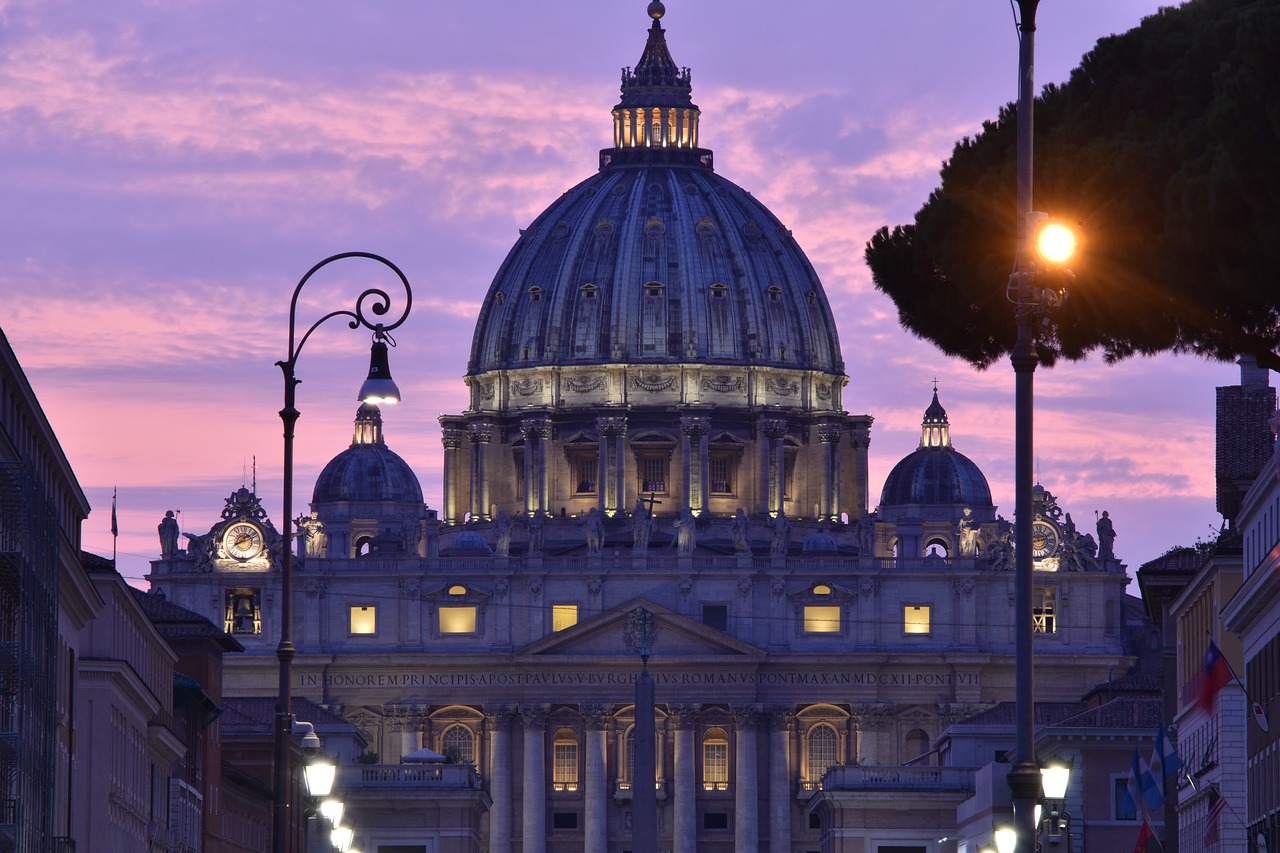
Rome Vatican Place Landscape Italy  - JerOme82 / Pixabay

On Francis’ New “Deaconess” Panel

There never was nor can there ever be the office of “deaconess” in the Catholic Church.

When I use the word “deaconess” in this context, I mean a female counterpart to the male office of deacon. There was never any such office.

If the term “deaconess” appears in Church history, we find it to be an imprecise term that will vary not only from age to age, but from one geographic location to the next. Father Aimé George Martimont, author of the scholarly and definitive work on the subject titled Deaconesses, An Historical Study, observes “The Christians of antiquity did not have a single, fixed idea of what deaconesses were supposed to be.”[1]

Yet on August 2 of this year, Pope Francis created a commission to study the possibility of allowing women to serve as deacons in the Catholic Church. Pursuing such a venture can only ignite further chaos in the Church and confusion among the faithful.

Extremely Limited Function

There was never an office of deaconess in the Latin Church.[2] We do come across references to deaconesses in various Greek and Eastern Rites. Yet the office is not uniformly found in the Oriental churches, and all mention is sporadic between the second and tenth centuries. Some Eastern Church territories, such as the church in Egypt, Ethiopia and the Maronites never accepted any office of deaconess.[3]

The women who were called “deaconesses” were not ordained in any sacramental sense of the word, but received a kind of blessing for certain ecclesiastical service. These “deaconesses” were primarily consecrated women whose work was highly restricted – usually limited assistance to other females. This included assisting women at baptisms and other services where the presence of men would have offended modesty.

“Moreover,” writes Father Martimort, “it must be even more strongly emphasized that deaconesses were never allowed to teach or preach in public.”[4]

It is of no use to appeal to St. Paul’s Epistle to the Romans in which Phoebe the “deaconess” is mentioned. The mind of the Church on this matter is summarized in the teaching of St. Thomas Aquinas. We read, “The Angelic Doctor commenting on the New Testament … saw Phoebe in the Epistle to the Romans only as one of those women who ‘served’ Christ and the Apostles, or who carried out works of charity in the manner of widows of 1 Timothy 5:10.”[5]

As for the Latin Church, we provide three ancient and authoritative texts that demonstrate how foreign was any idea in the early Church of women deaconesses, women’s ordination, and women serving in the sanctuary.

As early as the 4th century, there is the fiery directive from the bishops of the Council of Nimes in 396 A.D.:

“Equally, it has been reported by some that, contrary to the apostolic discipline – indeed a thing unheard of until now – it has been observed, though it is not known exactly where, that women have been raised to the ministry of deacons. Ecclesiastical discipline does not permit this, for it is unseemly; such an ordination should be annulled, since it is irregular; and vigilance is required lest in the future anyone should have the boldness to act in this fashion again.”

The Council of Orange in 441 A.D. spoke likewise:

“In no way whatsoever should deaconesses ever be ordained. If there already are deaconesses, they should bow their heads beneath the blessing which is given to all the people.”[6]

Then there is the forceful decree Necessaria rerum of Pope Gelasius, addressed to the bishops of southern Italy, dated March 11, 494. While not dealing directly with deaconesses, it manifests how alien was the idea of women in the sanctuary performing any form of priestly function:

“It is with impatience that we learned this: divine things have suffered such a degradation that female ministers serving at the sacred altars have been approved. The exercise of roles reserved to men has been given to the sex which they do not belong.”[7]

What would the Bishops of Nimes, the Council of Orange, and Pope Gelasius say about the plethora of lady-readers, altar girls, “let us pray to the Lord” prayer leaders, liturgical dancers and Eucharistic ministerettes now fluttering in great numbers throughout post-Conciliar sanctuaries?

No Continuity

As we follow the work of Father Martimont – whose calm, meticulous, thorough scholarship includes vast historical references from liturgical texts, euchologies (Eastern Rite), pontificals, ecclesiastical legislation, homilies, letters and other pertinent documents – we learn “the continuity of true ecclesiastical discipline was lacking in the case of deaconesses.”[8] There is no continuity from the ancient days of the Church until now. Only a modernist pick-and-choose antiquarianism – forbidden by the Church – could “justify” any thought of establishing the office of deaconess.

Even in Eastern Rites the practice was not observed “always, everywhere and by everyone.” The presence of deaconesses was so infrequent and scattered that we see in the writings of St. Jerome, a man who traveled widely in the East and knew it well, he “nowhere spoke about deaconesses, not even in his letter 394 to the priest Nepotian, to which he indicates the proper attitude to adopt toward virgins and widows.”[9]

As noted earlier, the institution of deaconesses was most often involved with the baptism of adult women. In various Eastern Rites at the time, in a ritual that connects baptism with Adam and Eve and the Garden of Eden, adults were baptized naked – a practice happily long extinct.[10]

Thus writes Father Martimont, “’As long as adult baptism were the norm, the necessity that brought about its creation [the office of deaconess] was geographically limited and rapidly becoming obsolete.” Even during this time the woman assisting the adult women being baptized did not necessarily have to be a “deaconess” but could be a pious matron of the congregation.11  Again, the practice only occurred in various churches of the Eastern Rite, never in the Latin Rite.

A concise summary of the deaconess’ limited function is contained in the Canonical Resolutions of James of Edessa (Eastern Rite) written somewhere between 683 and 708 A.D. The instruction proceeds in a dialogue format:

“Addai: Does the deaconess, like the deacon, have the power to put a portion of the sacred Host into the consecrated chalice?

“James: In no way can she do this. The deaconess did not become a deaconess in order to serve at the altar but rather for the sake of women who are ill.

“Addai: I would like to learn in a few words what the powers of the deaconess in the Church are.

“James: She has no power over the altar, because when she was instituted, it was not in the name of the altar, but only to fulfill certain functions in the Church. These are her sole powers: to sweep the sanctuary and to light the lamps, and she is only permitted to perform these two functions if no priest or deacon is available. If she is in a convent of women, she can remove the sacred Hosts from the tabernacle [= cabinet], only because there is no priest or deacon present, and give them out to the other sisters only or to small children who may also be present. [Comment: Keep in mind this is within the context of the Eastern Rite where the consecrated Eucharist is not touched by human hands, but delivered to the communicant by means of a small spoon – JV] But it is not permitted to her to take the Hosts off the altar, nor carry them to the altar nor indeed in any way to touch the table of life [the altar]. She anoints adult women when they are baptized; she visits women who are ill and cares for them. These are the only powers possessed by deaconesses with regard to the work of the priests.”[12]

Even if we come upon ancient Eastern Rite rituals that speak of “ordination” of deaconess, the word “ordination” is here used in a loose sense that has nothing to do with the Sacrament of Holy Orders. The Patriarch Severus of Antioch, writing in the sixth century, explains, “In the case of deaconesses … ordination is performed less with regards to the needs of the mystery than exclusively with regard to doing honor.” He continues, “In the cities, deaconesses habitually exercise a ministry relating to the divine bath of regeneration in the case of women who are being baptized.”[13]

Anachronism and Ambiguity

The office of deaconess – sporadic as it was – virtually disappeared by the time of the eleventh century. So much so that Greek and Eastern Canonists of the Middle Ages did not even know who or what deaconesses were, for by then deaconesses had long since ceased to exist.[14] The office had become an obsolete curiosity.

Nothing could be more anachronistic than an attempt to “revive” the office of deaconess in a manner unrelated to its limited practice in the early Church, and use it as an official title to formalize today’s raging novelty of women in the sanctuary and “lay ministers” of the Eucharist.

Yet this is precisely the aim of Francis’ new deaconess panel, which consists of six men, six women – a politically-correct gender-balanced structure rather than a panel of scholars of unquestionable competence regarding the Catholic Faith of all time.

The panel includes Phyllis Zagano, senior research associate-in-residence at Hofstra University in New York, a bold advocate of women’s ordination. It’s not hard to guess what the panel’s conclusions may be – a forgone conclusion in favor of approving some form of “deaconesses.” As we know from the British satire Yes, Prime Minister, “The government never publicly opens the debate until it has already privately made up its mind.”

We are painfully aware of the distasteful tactics of modern discussions that seek to introduce more revolution: Muddying the historical waters, imprecision of terms, clever use of anachronisms, calculated ambiguity, significant silence concerning any historic fact that frustrates the forgone conclusion of the panel’s ultimate aim. Combine all this with the massive ignorance of today’s un-catechized Catholics who are children of the Vatican II revolution, under the sway of the bucking-bronco Bergoglio pontificate that favors novelty and deprecates alleged “small-minded rules.” The results can only be lethal for doctrinal and liturgical integrity.

“Fraught with Ambiguity”

There is no need to re-study the matter of deaconesses, especially when the definitive work of Father Martimort already demonstrates that the ancient, sporadic office of deaconess has nothing to do with women performing priestly functions.

We can do no better than close with the final paragraph of Father Martimort’s superb work. He writes: “The complexity of the facts about deaconesses and the proper context of these facts prove to be quite extraordinary. There exists a danger of distorting both the facts and the texts whenever one is dealing with them secondhand. It is also difficult to avoid anachronisms when trying to resolve the problem of the present by reference to the solutions appropriate to a past that is long gone.”

Father Martimort concludes: “For the fact is that the ancient institution of deaconess, even in its own time, was encumbered with not a few ambiguities, as we have seen. In my opinion, if the restoration of the institution of deaconesses were indeed to be sought after so many centuries, such a restoration itself could only be fraught with ambiguity.”[15]

Any move toward the establishment of “deaconess” stands already condemned by the consistent teaching of the Popes, manifested in that of Benedict XV who warned, “We wish to have this law of the ancients held in reverence,‘let nothing new be introduced, but only what has been handed down.’ This must be held an inviolable law in matters of Faith.”[16]

A new office of deaconess introduced in the post-Conciliar Church will resemble nothing of history and contain nothing that has been handed down. The practice existed only sporadically in various geographical locations of the Eastern church, was severely restricted in its activity, and had disappeared by the 11th century.

If “deaconesses” are approved, we will face an embarrassing imitation of contemporary Protestant practice – ministerettes in goofy robes pretending to be men, usurping activities that belong to the priest alone. The office of deaconess will further accustom Catholics to see women in roles of ecclesiastical leadership and pave the way for more discussion of “women priests.”

The introduction of the destructive novelty of “deaconess” can only lead to further degradation of the Church and the priesthood. It must be firmly resisted.

Notes:
[1] Deaconesses, An Historical Study, Aimé Georges Martimort, [San Francisco: Ignatius Press, 1986], p. 241. The book is an exhaustive historic and scholarly treatment, probably the best on the topic.
[2] For a comprehensive explanation, see in Part II of Father Martimort’s book we’ve been quoting “Deaconesses in the Latin Church.” Here he explains there was no such thing up until the 5th century, and anything remotely regarded as some sort of deaconess was strictly limited to that of a particular office inside – and only inside – a convent of nuns, and even here only between the 6th and 12th centuries.
[3] Martimort, op. cit., p. 182.
[4] Ibid., p. 247.
[5] Ibid., p. 226. A fuller discussion of “Phoebe” appears on pp. 18-20.
[6] Both quotes (Nimes and Orange), ibid., p. 193.
[7] Ibid., p. 196.
[8] Ibid., p. 242.
[9] Ibid., p. 192.
[10] See ibid., pp. 131-132.
[11] Ibid., p. 242.
[12] Ibid., p. 143.
[13] Ibid., p. 128.
[14] Ibid., p. 242.
[15] Ibid., p. 250.
[16] Pope Benedict XV, Ad Beatissimi Apostolorum Principis (Nov. 1, 1914), n. 25.

 Originally published in August 2016
Posted on Leave a comment

“Saint” Paul VI? More Doubt and Confusion

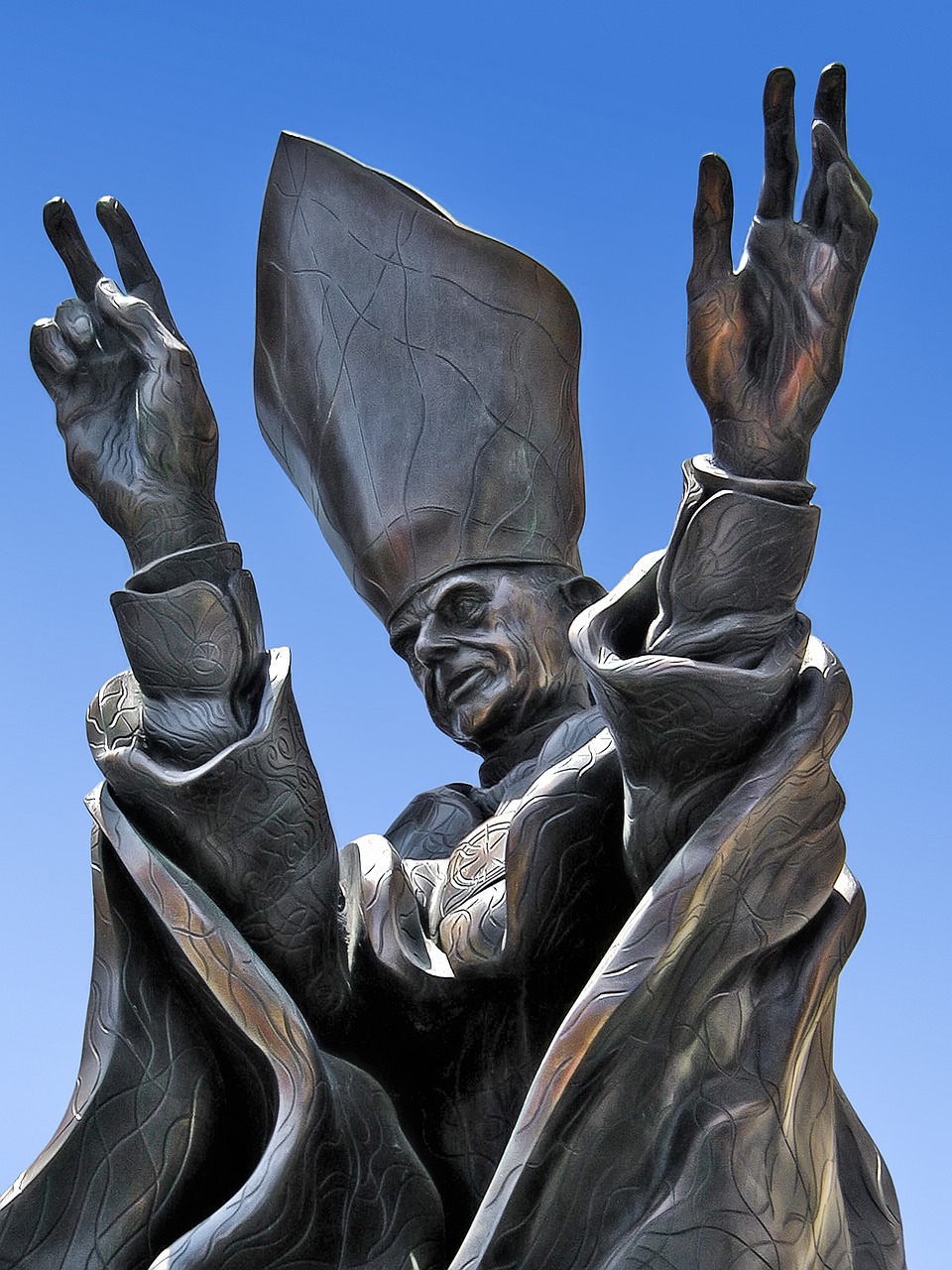
Statue Bronze Pope Paul Sixth  - Camera-man / Pixabay

Editor’s Note: This article (originally titled “Paul VI to be ‘Canonized’?”) first appeared on the old CFN website (Dec. 19, 2012) and was subsequently published in the January 2013 print edition. In light of today’s “canonization” of Paul VI, John Vennari’s (R.I.P.) treatment of the subject is even more timely and needed than when it first appeared. Please share widely and educate others about the truth regarding Pope Paul VI. Also read and share John’s article entitled Doubt and Confusion: The New “Canonizations”.

*****

In 1980, while still new to the Traditional Movement, I heard an interview by Michael Davies on Vatican II. Speaking of Paul VI, Davies said he considered him to be the worst pope in Church history.

“If you look at the state of the Church when he took over (1963), and then look at the state of the Church when he died (1978),” said Davies, there has never been such a wholesale devastation of the Church in so short a time period. It all took place on his watch and was due to his revolutionary Conciliar policies.

The destruction of the Mass by means of implementing the Novus Ordo Missae is the most far-reaching act of Paul VI’s papacy. It affected the Catholic in his primary connection to the Church, Sunday Mass. Paul VI insisted on foisting a new liturgy upon the Church that was built on a Protestant model.

Journalist Jean Guitton, a close friend and confident of Pope Paul VI, confirmed that it was the aim of the Pope to protestantize the liturgy.

In a radio interview in the 1990s, Guitton said:

“The intention of Paul VI with regard to what is commonly called the Mass, was to reform the Catholic liturgy in such a way that it should almost coincide with the Protestant liturgy – but what is curious is that Paul VI did that to get as close as possible to the Protestant Lord’s supper… there was with Paul VI an ecumenical intention to remove, or at least to correct, or at least to relax, what was too Catholic, in the traditional sense, and, I repeat, to get the Catholic Mass closer to the Calvinist Mass.”[1]

It was Paul VI who championed the entire new program of the Council, especially its novel policy of ecumenism that no longer seeks conversion of non-Catholics, but convergence with non-Catholics. Vatican II’s Decree on Ecumenism (Unitatis Redintegratio) warmed the heart of Protestants. Lutheran Observer Robert McAffee Brown, a “minister” who favored divorce and birth control, celebrated the new orientation.

In his 1967 book, The Ecumenical Revolution, McAffee Brown applauds the Council’s Decree on Ecumenism:

“The document makes clear how new is the attitude that has emerged. No more is there talk of ‘schismatics and heretics’ but rather of ‘separated brethren.’ No more is there an imperial demand that the dissidents return in penitence to the Church who has no need of penitence; instead there is recognition that both sides are guilty of the sins of division and must reach out penitentially to one another. No more are Protestants dismissed merely as ‘sects’ or psychological entities alone; instead it is acknowledged that there is a measure of ‘ecclesial reality’ to be found within their corporate life.”[2]

Worse, the two central papal documents of the early 20th Century on Ecumenism, Pope Pius XI’s 1928 Mortalium Animos and Pope Pius XII’s 1949 Instruction on the Ecumenical Movement, were neither mentioned nor footnoted in the Council’s Decree on Ecumenism. Paul VI’s Council pretended these texts did not exist.

These two papal documents state that the only true unity of Christians can be accomplished by the return of non-Catholics to the one true Church. This Catholic principle, founded on the words of Christ Himself, was at odds with Pope Paul’s Council.

Dr. George May noted the grave consequences of Vatican II’s ecumenical approach:

“Following this particular cherished ‘fruit’ of the Council, (ecumenism) a ‘revaluation’ of Protestantism got underway everywhere among Catholics, and certain lucid Protestants could not hide their surprise,” notes Dr. May. “The Council had prepared the astonishing rehabilitation of Protestantism insofar as it described with great partiality, the religious communities resulting from the Reformation. Only the positive aspects were noticed. The immense evil that Protestantism brought upon the world and the aggressiveness against the Roman Catholic Church that even today it manifests everywhere where its affairs are not supported by the Catholic Church, all that was omitted. The Church will have to pay for this error of the Conciliar Fathers.”[3]

Indeed, a Benedictine monk said to Jean Madiran that, thanks to Vatican II, we have passed from theocentrism (God-centeredness) to anthropocentrism (man-centeredness).[4]

As we recall the disastrous effects of the Council; as we remember the years 1963 to 1978, with its collapse of dogmatic and moral theology, the upheaval in Catholic schools, seminaries and religious orders, the breakdown of Church discipline, the scorn for Scholastic philosophy, the persecution of traditional Catholics, the worldwide confusion, the mass defection of Catholics, and the appointment of countless revolutionary bishops, we gasp with disbelief at the latest news from Pope Benedict’s Vatican: Theologians, cardinals and bishops of the Congregation for the Causes of Saints have given the go ahead for Paul VI’s beatification.

Andre Tornielli writes in the December 14, 2012 edition of Vatican Insider, “The late pope’s Positio – the collection of documents used in the process by which a person is declared a saint – was approved unanimously by all present. All bishops and cardinals expressed themselves in favor of the ‘heroic virtues’ of Giovanni Battista Montini, elected Pope with the name Paul VI in 1963 and deceased in 1978. Theologians who voted separately also voted unanimously in favor.”

Tornielli concludes, “The Pope [Benedict XVI] intends to proceed as quickly as possible. The beatification is expected by the end of the Year of Faith. 2013 marks the 50th anniversary of Montini’s election as Pope and the 35th anniversary of his death.”[5]

The proposed beatification of Paul VI is nothing more than the triumph of wayward sentiment. Again, we see Catholic terms stripped of their meaning. A beatification or canonization, once a sure sign of the heroic virtue of the person canonized, is now degenerated to the level of the Academy Awards. In the case of both Paul VI and John Paul II, it is a special achievement medal bestowed by revolutionary prelates on leaders who advance modernist causes.

Pope Benedict XVI, a life-long Vatican II progressive to this day, has shown himself first and foremost a disciple of the New Theology by agreeing to beatify its star icons.

The beatification of Paul VI and John Paul II also serve another purpose: it is a means of canonizing Vatican II and the conciliar revolution. The new program of Vatican II cannot withstand genuine Catholic scrutiny. It is a rupture with the past; it finds no support in Scripture, Tradition or reason.

Thus, the Conciliar revolution must be imposed by intimidation; not an intimidation at gunpoint, but an intimidation that overwhelms Catholics by proclaiming the alleged saintliness of its most determined innovators. “Blessed” John XXIII, “Venerable” Paul VI, “Blessed” John Paul II, new saints for the new religion, all elevated to their exalted status by a new canonization process that dispenses with the role of “devil’s advocate”, and no longer insures the miraculous beyond all natural explanation.

The new conciliar program reveals its propagators as churchmen who publicly betrayed their Oath Against Modernism, solemnly sworn to God on the night before their ordination. The eminent theologian Msgr. Joseph Clifford Fenton warned in 1960 that the man who took the Oath Against Modernism, and who then promoted Modernism himself, or allowed it to be promoted, “would mark himself not only as a sinner against the Catholic Faith but also as a common perjurer.”[6] Pope Benedict’s Vatican “beatifies” such men.

The diabolical disorientation continues full gallop. While we heed the Message of Fatima to “pray a great deal for the Holy Father,” we also urge Catholics to resist this latest attempt to canonize conciliar confusion.

Notes

[1] Quoted from Michael McGrade, “Redemptionis Sacramentum, DOA, RIP”, Christian Order, Aug.-Sept. 2004.

[2] Robert McAffee Brown, The Ecumenical Revolution, 2nd ed. (Garden City: Doubleday, 1969), pp. 67-68.

[3] Quoted from Arnaud de Lassus, A Layman’s Guide to Vatican II (Winona: STAS Editions, 2012), p. 24.

[4] Ibid., p. 28.
[5] Andrea Tornielli, “Cardinals Vote Unanimously in Favor of Paul VI’s Canonization”,

Vatican Insider, Dec. 14, 2012.
[6] Msgr. Joseph Clifford Fenton, “The Sacrorum Antistitum and the Background of the Oath

Against Modernism,” American Ecclesiastical Review, October 1960, p. 259.

“Saint” Paul VI? More Doubt and Confusion

page4image602318704

page4image602319056

page4image602319344

Copyright © catholicfamilynews.com. All rights reserved. 

Posted on Leave a comment

The “Spirit of Assisi” vs. Saint Francis of Assisi

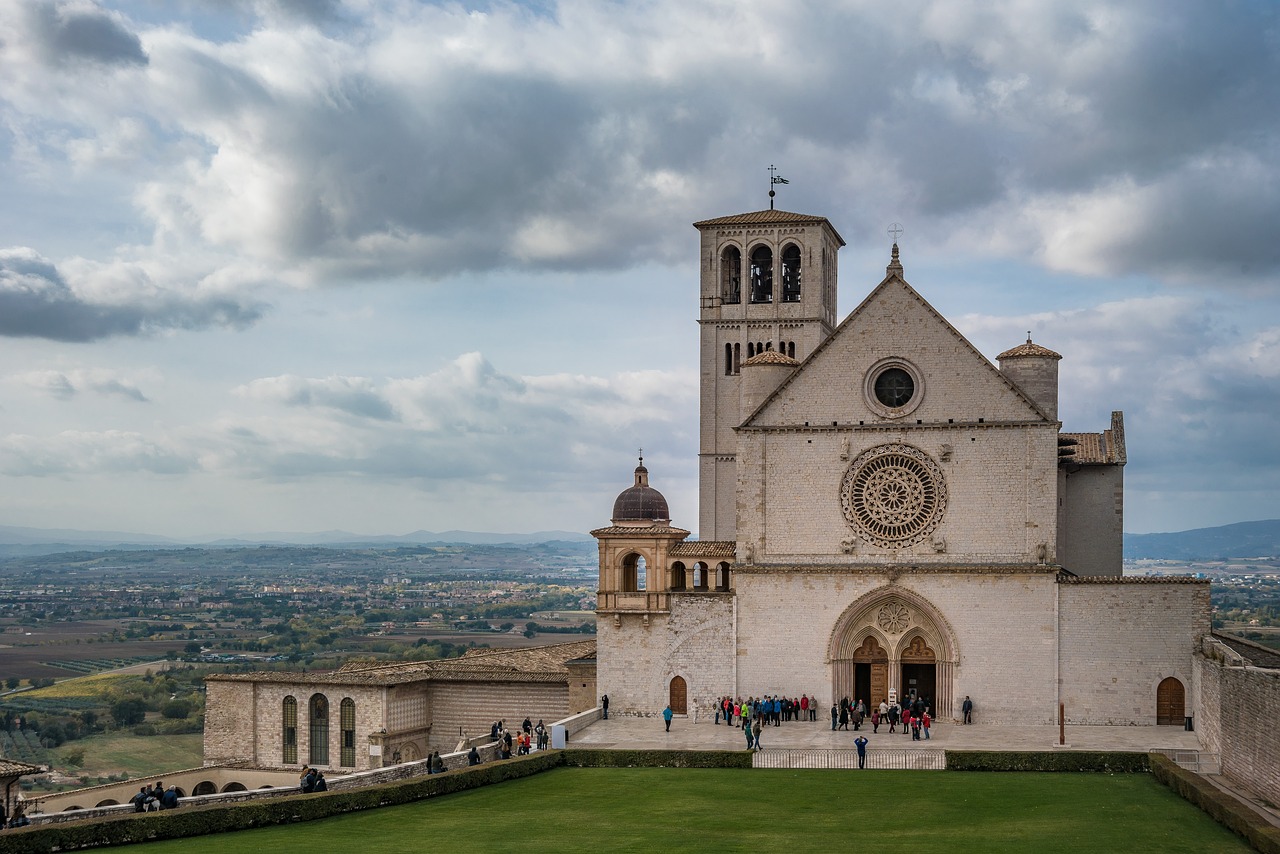
Architecture Church Heaven Religion  - bogitw / Pixabay


Editor’s Note: Last week Friday, on the Feast of St. Francis of Assisi (Oct. 4, 2019), a “prayer ceremony” took place in the Vatican Gardens during which “a tree from Assisi was planted as a symbol of integral ecology, to consecrate the Synod on Amazonia to Saint Francis,” according to the official Vatican statement on the event. During this ceremony, asCatholic News Agency reported, “A group of people, including Amazonians in ritual dress, as well [as] people in lay clothes and a Franciscan brother, knelt and bowed in a circle around images of two pregnant women…in the presence of the pope and members of the curia.” Footage of the event, broadcast by Vatican News, is available below:

I can confirm that this was a pagan fertility ritual, with the indigenous leaders worshiping two idols of a fertility goddess of the Earth, which can be seen in the middle of the circle. An idol is then presented to Pope Francis at the end of the clip. #SinodoAmazonico https://t.co/yjSbyKcbDw

— Catholic Sat (@CatholicSat) October 4, 2019

Despite the efforts of some to explain the naked wood-carved statues as representing Our Lady and St. Elizabeth (the Visitation), Getty Images (who had a photographer at the event) describes the wooden figures as “representing Pachamama (Mother Earth),” thus confirming the pagan nature of the ritual performed in preparation for the opening of the Pan-Amazon Synod (Oct. 6-27, 2019).

This scandalous display was simply the latest manifestation of the “spirit of Assisi,” a phrase coined by Pope John Paul II after his infamous “World Day of Prayer in Assisi” (Oct. 27, 1986), the purpose of which was to pray for peace, “which is not a result of negotiations, political compromises or economic bargainings,” said John Paul II to open the event, but “is the result of prayer, which, in the diversity of religions, expresses a relationship with a supreme power that surpasses our human capacities alone.” (Note the phrase, “the diversity of religions,” which is also found in the Document for Human Fraternity signed by Pope Francis on Feb. 4, 2019.)

Pope John Paul II, together with several religious leaders (Christian and non-Christian), during the “World Day of Prayer” in Assisi, Italy (Oct. 27, 1986).

Catholic historian Henry Sire summarizes what transpired on that occasion as follows:

“At this meeting, under the pope’s presidency, representatives of many Christian churches, together with an assortment of Hindus, Tibetan lamas, Japanese bonzes, tribal snake worshippers, and animists of all sorts performed their respective rites…. For a day, the town of St. Francis was given over to displays of pagan worship. Cardinal Silvio Oddi reported that a group of Buddhists enter the church of San Pietro, set up a statue of Buddha on the tabernacle of the altar, and venerated it with prayer scrolls and incense; when a Benedictine priest protested at the sacrilege he was taken away by the police.”[1]

Similar events were held in Assisi in 2002 under John Paul II (known as ‘Assisi II’) and again in 2011 under Benedict XVI (‘Assisi III’).

In light of the heterodox “spirit of Assisi”, which was ushered in by John Paul II and is alive and well under Francis, Catholic Family News offers readers the following classic article written by John Vennari (R.I.P.) and originally published in the April 2002 edition of the paper. As John thoroughly demonstrates, the false ecumenical and interreligious “spirit of


Assisi” and is the very antithesis of the real St. Francis of Assisi, a staunch Catholic who called all men—even the Islamic Sultan of Egypt—to convert to the one true Faith for salvation. May the true St. Francis of Assisi intercede for the Church Militant on earth and obtain deliverance from the false “spirit of Assisi”! – Matt Gaspers, Managing Editor

*****

It is becoming increasingly obvious that within the Church since the Council we are now in the age of slogans: empty, meaningless slogans that really do not have much substance and that do not convey the true picture of what is actually being promoted.

We are all familiar with the slogans: the promise of a “new springtime,” a “civilization of love,” a “new Pentecost,” and now, a novel orientation named “the spirit of Assisi”.[2]

In a recent lecture called “The New Pentecost vs. the True Pentecost,” I explained that the only way we could call anything a “new Pentecost” is to test first how it compares with the true Pentecost as recorded in the Acts of the Apostles. There I described how, point-by- point, the so-called “new Pentecost” fails to measure up to the first Pentecost, especially regarding the conversion of the Jews. Often, the so-called “new Pentecost” is the direct opposite of what we see in the true Pentecost.

Likewise with the “Spirit of Assisi,” a previously unheard-of term that recently came into vogue in Catholic circles. The term automatically invokes the idea that there is a connection with Saint Francis of Assisi.

So, what does the “spirit of Assisi” have to do with Saint Francis of Assisi? Nothing! In fact, they are contradictory spirits.

Within a Catholic context, it is not possible to have a “spirit of Assisi” that is divorced from Saint Francis of Assisi. Yet this is exactly what the pan-religious “spirit of Assisi” is. It is something that Saint Francis of Assisi would have regarded with absolute horror.

The “Spirit of Assisi,” spearheaded in 1986, comprises Catholics, Protestants, Orthodox, Jews, Moslems, Animists, Hindus, Zoroastrians, Witch Doctors, and various others gathering at the same place (usually at a Catholic church) to pray for peace. The Catholic praying to the true God, and members of false and heathen religions praying to their false gods.

Could anything be more contrary to the spirit of St. Francis of Assisi? To place the one true

religion of Jesus Christ on the same level with false creeds?

Regarding non-Christian religions, Sacred Scripture teaches that “all the gods of the nations are devils” (Ps. 95:5). Regarding heretical religions, Saint Paul tells us that false creeds are the “doctrines of devils” (1 Tim. 4:1). Thus, Sacred Scripture and Sacred Tradition always forbade Catholics to engage in religious camaraderie with false religions.[3]

Saint Francis: Knight of the Church Militant

Saint Francis of Assisi was firmly committed to the truth that “outside the Catholic Church, there is no salvation.” He was not an apostle of Gaudium et spes dialogue. He was an apostle of Christ who preached the Gospel,

1. for the salvation of those souls who were already Catholic, but had fallen away from the Gospel ideal, and

2. for the salvation of infidels and non-believers, whom he knew would be lost if they did not embrace Christ and His one true Catholic Church.

His biographer, Fr. Cuthbert, OSFC, wrote in 1916 that Saint Francis was “apt to be impatient with meddlers and heretics to the end”.[4]

In fact, Saint Francis spoke harsh words about those who do not accept Catholic truth. He did not speak in vague terms about the “seeds of truth found in all religions.” Nor did he announce his famous trip to preach to the Moslems as “an invitation to dialogue between the great monotheistic religions in the service of the human family”.[5]

No. He preached the need for conversion of the non-Catholics to the one true Church of Christ for salvation.

In one of his oldest Admonitiones (“Admonitions”) to the Brothers in his Order, Saint Francis said the following regarding those who do not accept Catholic truth:

“All who have seen Jesus in the flesh but have not seen Him after the Spirit and in His Divinity, and have not believed that He was really the Son of God, are doomed. Also those are doomed who see the Sacrament of the Body of Christ, which is consecrated with the words of the Lord on the altar and by the hand of the priest in the form of bread and wine, but do not see in it the Spirit and Divinity and have not believed that it really is Our Lord Jesus Christ’s most holy Body and Blood.”[6]

Thus, those who try to portray Saint Francis of Assisi as an apostle of Vatican II’s new brand of dialogue and ecumenism are simply not telling the truth. Especially since today’s ecumenism, of which the “Spirit of Assisi” is the most radical element, does not seek the conversion of non-Catholics to the one true religion, but only seeks to work together with all religions in a “reconciled diversity” for the “betterment of the human family”.[7] There is no sharper contrast to this new, effeminate ecumenism that Saint Francis’ encounter with the Sultan, and his Friars’ missionary zeal among the Muslims.

Saint Francis vs. Islam

Around 1219, after a General Chapter of the Order, Saint Francis decided to undertake a mission to the Muhammadans in Egypt, where also there was a Crusade being fought.

During this time, Francis stayed with the Christian army, and then crossed over to the Moslem lines. Once outside the Christian lines, he was seized by Moslem soldiers. Francis told the soldiers that he wanted to preach Christ to the Sultan, who allowed him into the camp.

When brought to the Sultan, Francis said, “I am sent by the Most High God, to show you and your people the way of salvation by announcing to you the truths of the Gospel.”[8] And when Saint Francis preached, the Sultan felt himself very much drawn to Francis and to the power of his words. So much so, that he invited Francis to stay with him.

“Willingly,” Francis replied, “if you and your people will be converted to Christ.”[9]

Francis then proposed his famous challenge. He said: “If you yet waver between Christ and Mohammed, order a fire kindled and I will go into it with your priests that you may see which is the true Faith.”[10] The Sultan was not willing to permit this trial by fire, so Francis requested permission to leave. And the Sultan gave orders that Francis be conducted back to his camp with courtesy.

While this was going on in Egypt, there were five firebrand Franciscan Friars kicking up so much dust in Muslim Morocco that all five of them would be put to death. Their names were Brothers Bernardo, Ortho, Pietro, Accurso, and Aduto.

First they went to Spain, to Moslem Seville. And because they tried to preach the Gospel there, they were scourged, imprisoned and expelled from that kingdom. Then they went over to Muslim Morocco in an attempt to convert the infidels. When they arrived, these Friars did more than just preach in the streets. They marched right into a mosque and denounced Mohammed from inside the mosque.[11]

The Friars were seized, imprisoned and scourged, but that did not temper their zeal. While in prison, they tried repeatedly to convert the jailers.

The rulers of Morocco were trying to find a diplomatic way out of this, so they arranged that these imperious Friars be sent out of the country.

And how did the five Franciscans respond? Father Cuthbert relates: “But the five Friars knew nothing of diplomacy and had not the temper to live and let live. Mohammed was, in their eyes, the enemy of Christ, and the souls of this people were rightful spoils for their Divine Redeemer. To go back upon their mission would be a traitorous backsliding from their fealty to their Savior.”[12]

At the first opportunity, these wiry Franciscans gave their jailkeepers the slip. Immediately, they returned to the city, and there they were again, in front of the mosque appealing to the infidels to renounce Mohammed and accept Christ.

They were seized, cast into jail and tortured. While they were on the rack, the jailers promised the Friars that their lives would be spared and they would be given gifts, if they would deny Christ and accept Mohammed.

The Friars responded by uttering the praises of Our Lord, and urged the torturers to renounce Mohammed and accept Jesus Christ.

The Muhammadans answered by beheading each Friar, and casting their bodies outside the walls to be the food of dogs. A Portuguese dignitary arranged a stealth operation to have their bodies rescued. They were taken to Portugal, and with great reverence they were laid in the Church of the Canons Regular (Augustinian) in Coimbra.

Among all the people who flocked to pray to and honor the martyred Franciscans, there was a young Augustinian Canon who was enraptured by the zeal and love of Christ that burned in these Friars. He sought out the local Franciscans and begged to be admitted to the Order.

That young Augustinian, who became Franciscan, is now known to us as Saint Anthony of Padua, the Miracle Worker, whom Catholics honor with the title the Hammer of Heretics.

And as for Saint Francis: What did he think of these five Friars who marched into a mosque and denounced Mohammed from within the Muslim’s own holy place? Who urged Moslems for their own salvation not to follow the false prophet, Mohammed? Did Saint Francis organize on the following March 12 a grand apology for the insensitivity of his friars for not understanding that the “Moslems, together with us, worship the same God”?

No! Francis cried out in a transport of gratitude to Heaven, “Now I can truly say I have five brothers.”[13]

This is the true spirit of Assisi!

[1] H.J.A. Sire, Phoenix from the Ashes (Kettering: Angelico Press, 2015), p. 383. [2] This short article is an excerpt from a more extensive speech by the author.

[3] For Scripture references, see Bishop George Hay, CRFN, “Ecumenism Condemned by Sacred Scripture,” Catholic Family News, May 1996 (reprint No. 292). For the finest summary of the Magisterium’s consistent condemnation of ecumenism, consult Pope Pius XI’s 1928 Encyclical Mortalium Animos, “On Fostering True Christian Unity”.

[4] Cuthbert, Life of Saint Francis of Assisi (New York: Longmans, Green and Co., 1916), p. 12.

[5] Sadly, this is a direct quote from Pope John Paul II. See “On Pilgrimage to Mt.
Sinai,” Origins, March 9, 2000. Regarding John Paul II’s disappointing commitment to ecumenical novelties, Fr. Joseph de Sainte Marie, who was a theologian and loyal son of the Pope, emitted the broken-hearted lament and warning: “In our day, and it is one of the most obvious signs of the extraordinarily abnormal character of the current state of the Church, it is very often the case that the acts of the Holy See demand of us prudence and discernment” (cited from Apropos, Isle of Skye, Scotland, No. 16, 1994, p. 5).

[6] Admonitio prima de Corpore Christi (Quaracchi edition, p. 4), quoted in Johannes Jorgensen, St. Francis of Assisi (New York: Longmans, Green and Co., 1912), p. 55.

[7] One example among many, Cardinal Walter Kasper, appointed by Pope John Paul II as the Prefect of the Vatican’s Pontifical Council for Promoting Christian Unity, recently said, “Today we no longer understand ecumenism in the sense of a return, by which the others would ‘be converted’ and ‘return to being Catholics.’ This was expressly abandoned at Vatican II.” (Adisti, February 26, 2001). English translation quoted from, “Where Have They Hidden the Body,” by Christopher Ferrara. See also Iota Unum, chap. 35, where Romano Amerio demonstrates that converting non-Catholics to the one true Church is not the aim of today’s practice of ecumenism.

[8] Lives of Saints, “Saint Francis of Assisi” (John J. Crawley & Co.,1954).

 [9]  Cuthbert, Life, p. 280.

 [10]  Lives of Saints, John J. Crawley & Co.

 [11] Cuthbert, Life, p. 283.

 [12] Ibid., p. 284.

[13] Ibid., p. 285.


Copyright © catholicfamilynews.com. All rights reserved.